5 Tips to Avoid Improper Endoscope Reprocessing Risks

Time:2026-09-16 Author:Isabella
0%

Endoscope reprocessing is a clinical safety process, not a routine cleaning task. Each flexible scope contains narrow channels, valves, seals, and surfaces that can retain organic material. A missed channel may remain invisible after external inspection. Yet that hidden residue can affect every subsequent patient.

What are the risks of improper endoscope reprocessing? The consequences may include microorganism transmission, procedure delays, damaged equipment, and exposure risks for healthcare workers. Inadequate cleaning can also reduce the effectiveness of disinfection or sterilization. Water quality, drying failures, incorrect chemical concentration, and rushed manual brushing can all create weak points. Small errors matter.

Reliable practice follows the manufacturer’s instructions for use, current infection prevention guidance, and validated facility procedures. Staff need appropriate training, documented competency, suitable brushes, leak testers, detergents, and drying systems. A clear record should show who performed each step and when. Independent audits can reveal problems that routine confidence misses.

Still, no workflow is flawless. A checklist may be completed while a difficult channel remains unclean. A familiar device may encourage shortcuts. That uncomfortable possibility deserves attention, not denial. Teams should examine near misses, question unclear instructions, and stop processing when equipment appears damaged. These actions support safer decisions and stronger accountability.

The following five tips focus on practical controls. They address careful pre-cleaning, complete manual cleaning, correct disinfection, thorough drying, and traceable documentation. Used together, these measures can reduce preventable risks and protect patients throughout the endoscope’s service life.
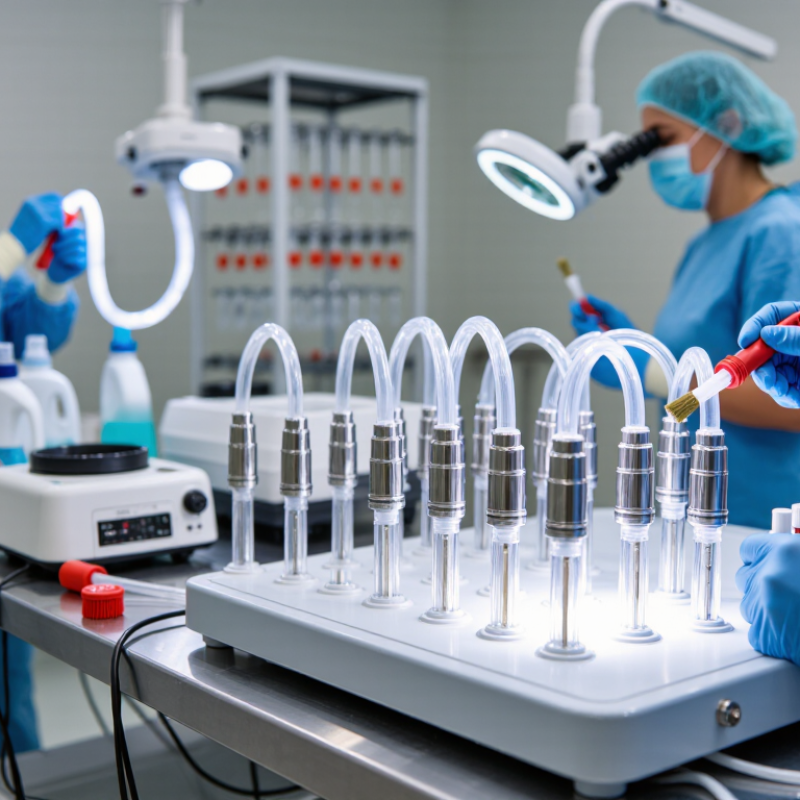
5 Tips to Avoid Improper Endoscope Reprocessing Risks

Map the Risk: CDC Classifies GI Endoscopes as Semi-Critical Devices

Gastrointestinal endoscopes are classified by the CDC as semi-critical medical devices. They contact mucous membranes but do not normally enter sterile tissue. This classification requires at least high-level disinfection after every patient use. A quick rinse is not enough. Residual protein can remain inside narrow channels, even when the exterior looks clean.

Safe reprocessing starts at the procedure room. Wipe the insertion tube immediately and flush channels before soil dries. Perform a careful leak test, then manually clean every channel with the correct brush and detergent. Follow the device’s validated instructions for water quality, contact time, temperature, and equipment compatibility. Skipping one step can weaken the entire process.

Drying matters. Moist channels can support microbial survival. Use filtered air and verify that internal pathways are dry before storage. Keep the scope protected from dust, damage, and accidental contact. Record cycle details, staff identity, inspection results, and any failed test. Competency checks should be practical, not merely signed forms. No process is flawless. A rushed handoff, unclear responsibility, or missed inspection can expose patients and staff to preventable risk. Regular audits and honest review help reveal those weak points before they become incidents.

5 Tips to Avoid Improper Endoscope Reprocessing Risks

CDC guidance classifies gastrointestinal endoscopes as semi-critical devices because they contact mucous membranes. They require, at minimum, high-level disinfection after thorough cleaning.

CDC-Aligned Reprocessing Checklist

Follow the complete workflow: pre-clean immediately after the procedure, perform a leak test, manually clean all channels and external surfaces, apply validated high-level disinfection or sterilization, then rinse, dry, and store the endoscope to prevent recontamination.

Source: U.S. Centers for Disease Control and Prevention, Guideline for Disinfection and Sterilization in Healthcare Facilities.

Begin Immediately: AAMI ST91 Requires Point-of-Use Precleaning

AAMI ST91 emphasizes point-of-use precleaning immediately after an endoscopic procedure.

Do not wait.

Residual blood, mucus, and tissue can dry inside channels within minutes. Once debris hardens, later cleaning becomes less reliable and more difficult to verify.

Staff should wipe the insertion tube, flush accessible channels, and remove visible soil at the procedure site.

Use the fluids, brushes, and connection methods specified by the device instructions. Keep the endoscope moist during transfer.

Place it in a secure, labeled container, then move it promptly to the reprocessing area. These simple actions reduce the chance of hidden contamination.

Timing matters.

Record when precleaning began and when the device arrived for full reprocessing.

Supervisors should observe technique, not only review paperwork. A rushed wipe is not effective precleaning.

This is easy to overlook. Training should include difficult scenarios, such as heavy secretions or delayed transport.

Teams also need clear escalation steps when a channel cannot be flushed.

In practice, small gaps often occur during emergencies. Reviewing those gaps honestly can improve future compliance and protect patients.

Clean Before Disinfection: FDA HLD Testing Targets a 6-Log Reduction

Endoscope reprocessing is not a single cleaning step. It is a chain of controlled actions. The FDA’s reprocessing guidance identifies a 6-log10 microbial reduction as a critical performance target for high-level disinfection testing. That means reducing contamination by 99.9999%. Disinfection cannot reliably compensate for retained blood, mucus, or tissue. A narrow channel may look clean while hiding organic residue. That is the uncomfortable part.

Tip 1: Clean immediately. Flush and wipe the scope at the point of use, before soil dries. Follow the validated detergent concentration, temperature, and contact time. AAMI ST91:2021 stresses prompt treatment, channel brushing, leak testing, and documented processing.

Tip 2: Verify the process, not just the appearance. Use the required exposure indicators and record cycle data. Manual steps deserve direct observation. One missed valve can defeat an otherwise compliant cycle.

Tip 3: Dry every channel completely. Residual moisture supports microbial survival and biofilm formation. Store the endoscope in a controlled cabinet or protected area, without touching contaminated surfaces. The CDC states that inadequate reprocessing has contributed to healthcare-associated infection outbreaks. Yet records may show “processed” without proving each step occurred. That gap needs reflection. Human error remains possible, even with good equipment and training. Review failures openly, retrain staff, and reassess validation whenever detergents, accessories, or workflows change. FDA expectations are demanding for a reason: a 6-log claim is meaningful only when cleaning came first.

Verify Each Cycle: Check Leak Testing, Channels, Chemistry, and Drying

Every reprocessing cycle deserves verification, not assumption. The CDC documented seven patients infected during a contaminated duodenoscope outbreak, including two deaths. That investigation showed how one overlooked step can affect multiple patients.

Begin with leak testing before immersion. A failed test can allow fluid into internal spaces, where contamination may remain hidden. Inspect every channel opening, connector, and distal tip. Then confirm brushing and flushing records. A channel may look clean while retaining organic debris.

Chemistry requires equal attention. Record disinfectant concentration, temperature, contact time, and expiration status. Test strips can fail when used incorrectly, so staff need competency checks and clear documentation. AAMI ST91 emphasizes written procedures, quality monitoring, and traceability for flexible endoscope processing. Drying must be verified, too. Use the approved method, forced air where required, and adequate storage ventilation. Moisture is not harmless; it can support microbial growth.

The FDA has repeatedly warned that inadequate reprocessing may transmit serious infections. That warning should change daily behavior, not only emergency procedures. A rushed cycle is not a completed cycle. Review each record before release, and pause when results conflict. The uncomfortable truth is that documentation can look complete while technique remains inconsistent. Regular observation, refresher training, and periodic audits help expose that gap. Sources: CDC outbreak investigation, 2015; FDA safety communications on flexible endoscope reprocessing; ANSI/AAMI ST91.

5 Tips to Avoid Improper Endoscope Reprocessing Risks – Verify Each Cycle: Check Leak Testing, Channels, Chemistry, and Drying

Tip Verification Area What to Verify Evidence or Acceptance Indicator Risk if Missed Required Action
1 Leak Testing Perform the leak test before immersion or manual cleaning, using the endoscope’s instructions for use (IFU). Confirm that the test is conducted with the correct tester, connectors, pressure, and test duration. The scope remains within the specified test limits, with no visible bubbles, pressure loss, or other signs of leakage. Fluid may enter the insertion tube or internal components, causing damage and creating areas that cannot be adequately cleaned or disinfected. Stop processing, identify the scope, and send it for inspection or repair according to facility policy.
2 All Channels and Ports Confirm that every accessible channel, port, valve, connector, elevator mechanism, and distal opening is identified and processed. Use the correct channel adapters and brushes specified by the IFU. Each channel has been flushed and brushed as required, and the required steps are documented on the reprocessing record. Residual soil and microorganisms may remain in hidden or narrow pathways, reducing the effectiveness of high-level disinfection or sterilization. Reprocess the device if any channel or component was missed. Do not release it for patient use until all steps are complete.
3 Cleaning Chemistry Verify that the detergent or enzymatic cleaner is compatible with the device, within its stated use concentration, temperature, contact time, and expiration or use-life limits. Concentration and temperature checks are recorded when required; the solution is prepared, labeled, and replaced according to the product instructions and facility procedure. An overly weak solution may leave soil behind, while an overly strong or incompatible solution may damage materials or leave residues. Correct the solution before processing. Repeat cleaning when chemistry or exposure conditions were outside the approved limits.
4 Disinfection or Sterilization Cycle Verify the selected cycle is approved for the specific endoscope and accessories. Check exposure time, temperature, chemical concentration, water quality requirements, and channel connection or perfusion steps. The cycle record shows completed parameters without alarms, interruptions, or out-of-range values, and all required channels were connected or perfused. Inadequate exposure or incomplete channel contact can result in ineffective high-level disinfection or sterilization. Quarantine the device and repeat the complete validated process if cycle requirements were not met.
5 Drying and Storage Dry external surfaces and internal channels using the method, air quality, pressure, and duration specified by the IFU and facility procedure. Store the endoscope in a manner that prevents recontamination and supports continued drying. No visible moisture remains; channels are dried as required, storage conditions are clean and ventilated, and the storage time limit is monitored. Residual moisture can support microbial growth and may lead to contamination during storage. Continue drying or repeat the required reprocessing steps before release if moisture or storage contamination is suspected.
Important: Always follow the current endoscope, reprocessor, detergent, disinfectant, and sterilization-system instructions for use. If a required parameter is missing, out of range, or undocumented, do not release the device until the issue has been assessed and resolved.

Build Competence: CDC Calls for Device-Specific Reprocessing Training

5 Tips to Avoid Improper Endoscope Reprocessing Risks

A clean-looking endoscope may still hide bioburden inside a narrow channel. Device-specific training reduces that blind spot. The CDC recommends training personnel on each device, process, and manufacturer instruction. Competency should be assessed before independent work and repeated regularly. In 2015, the U.S. Food and Drug Administration reported more than 35 patients affected by infection outbreaks linked to contaminated duodenoscopes. The figure exposed a serious weakness: general cleaning knowledge is not enough.

Read the exact reprocessing instructions before handling the scope. Tip one: identify every channel and detachable part. Tip two: use the correct brushes, adapters, and flushing volumes. Tip three: observe leak testing and drying steps. Moisture can support microbial survival. Tip four: document time, temperature, chemicals, and operator identity. Missing records can hide a failed cycle. Tip five: repeat training after equipment changes, process deviations, or near misses. CDC guidance also supports routine quality audits and documented competency checks.

Training should include a real device, not only slides. Let staff trace a brush through each channel. Ask them to explain why drying matters. Supervisors should watch the full workflow and correct small shortcuts. One uncomfortable lesson remains: a signed checklist does not prove competence. Human error can occur during busy turnover. Audits may also miss problems when observations feel predictable. That is why facilities should compare logs, inspection findings, and staff performance. Sources: CDC Guideline for Disinfection and Sterilization in Healthcare Facilities; FDA safety communications on duodenoscope reprocessing.

FAQS

When should point-of-use precleaning begin?

Begin immediately after the procedure. Dried blood, mucus, and tissue can harden within minutes. Do not wait.

What should staff do before transporting an endoscope?

Wipe the insertion tube and remove visible soil. Flush accessible channels using approved fluids and connections. Keep the device moist.

How should the endoscope be moved to reprocessing?

Place it in a secure, labeled container. Transport it promptly to the reprocessing area. Record both times.

Why is timing important during precleaning?

Delays allow debris to dry inside narrow channels. Hardened material becomes harder to remove and verify. Small delays matter.

What should device-specific training include?

Staff should identify every channel and detachable part. They should practice with the actual device, brushes, adapters, and flushing volumes.

How can supervisors confirm staff competence?

Supervisors should observe the complete workflow. A signed checklist alone does not prove competence. Watch the hands, not only paperwork.

Why are drying and leak testing necessary?

Moisture can support microbial survival. Leak testing may reveal damage before further processing. These steps are easy to rush.

When should reprocessing training be repeated?

Repeat training after equipment changes, process deviations, or near misses. Regular competency checks are also useful. Human error remains possible.

What records should the team maintain?

Document precleaning time, arrival time, temperature, chemicals, and operator identity. Missing details can hide a failed cycle.

What should staff do when a channel cannot be flushed?

Stop and follow the facility’s escalation procedure. Do not quietly continue. The problem needs review, documentation, and correction.

Conclusion

Improper endoscope reprocessing can expose patients and healthcare staff to serious infection risks, making a reliable, step-by-step process essential. What are the risks of improper endoscope reprocessing? They include inadequate removal of organic material, ineffective high-level disinfection, hidden contamination in internal channels, equipment damage, and cross-contamination between procedures. Because gastrointestinal endoscopes are classified as semi-critical devices, they require careful handling from the moment they are used.

Effective reprocessing begins with point-of-use precleaning and continues with thorough cleaning before disinfection. Each cycle should include leak testing, channel inspection and flushing, correct chemistry use, and complete drying to reduce the chance of microbial survival. Staff competence is equally important: personnel should receive device-specific training, follow written procedures, and demonstrate their skills regularly. Consistent verification and documentation help identify failures early and support safer, more dependable patient care.

Isabella

Isabella

Isabella is a dedicated marketing professional with a sharp focus on driving brand growth and engagement through strategic content creation. With an extensive background in digital marketing, she combines her passion for storytelling with her keen understanding of industry trends to deliver......