China Top 10 ETO Sterilization Safety Protocols Guide

Time:2026-10-11 Author:Liam
0%

Ethylene oxide (ETO) sterilization protects heat-sensitive medical devices, but it demands disciplined control. This guide introduces China Top 10 ETO Sterilization Safety Protocols for safer, more consistent processing. The question “What are the safety protocols for ETO sterilization” requires more than a checklist. It requires trained judgment, validated equipment, and continuous monitoring.

Dr. William A. Rutala, a recognized authority in healthcare sterilization, stated, “Sterilization is a process that destroys or eliminates all forms of microbial life.” His words reinforce a practical point: successful sterilization depends on verified conditions, not assumptions. Operators should control gas concentration, humidity, temperature, exposure time, and aeration. Biological indicators provide stronger evidence than appearance alone. Chemical indicators add useful process information. Neither replaces complete validation.

Safety begins before the cycle starts. Staff should inspect chamber seals, confirm load spacing, check leak-detection systems, and wear approved protective equipment. ETO rooms need effective ventilation and restricted access. After exposure, devices require sufficient aeration before release, especially when residual ETO may affect patients or workers. Every cycle should include clear records, alarm reviews, maintenance checks, and documented corrective actions.

Small details matter. A tightly packed tray can block gas movement. A wet package can change the process. A rushed aeration period can create hidden risk. No protocol is perfect. Human error remains possible, even with advanced systems. Therefore, facilities should review near misses, question unexplained results, and improve procedures through evidence. This introduction prepares readers to examine ten practical protocols that connect technical control with everyday worker safety.
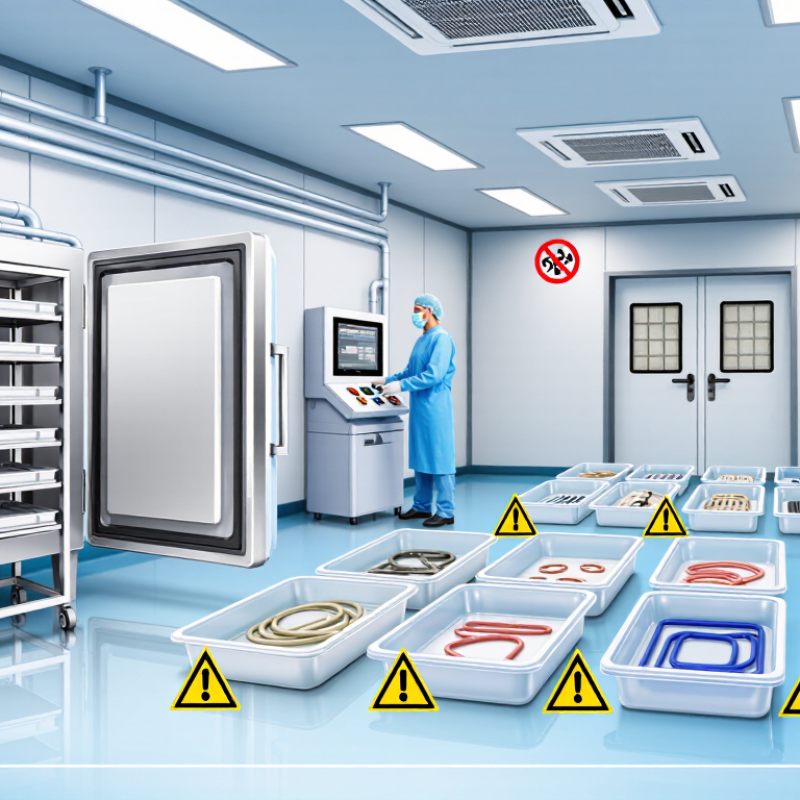
China Top 10 ETO Sterilization Safety Protocols Guide

Understanding ETO Sterilization and Its Main Safety Risks

China Top 10 ETO Sterilization Safety Protocols Guide

Understanding ETO Sterilization and Its Main Safety Risks

Ethylene oxide (ETO) sterilizes complex medical devices without high heat or moisture. The U.S. Food and Drug Administration reports that ETO processes more than 20 billion medical devices annually, representing about half of all sterile devices. Its value is clear. However, ETO is also toxic, flammable, and classified as a human carcinogen by several regulatory authorities. Exposure can occur during cylinder connection, chamber unloading, aeration, or maintenance. Odor is not a reliable warning.

ISO 11135 requires validated sterilization processes, while ISO 10993-7 addresses residual ETO and ethylene chlorohydrin. OSHA’s permissible exposure limit is 1 ppm over eight hours, with a 0.5 ppm action level. NIOSH recommends a much lower exposure limit of 0.1 ppm over ten hours. These differences deserve attention. A process may meet one threshold yet still require stronger local controls. Continuous monitoring, sealed transfer systems, interlocked doors, negative-pressure rooms, and documented aeration cycles reduce practical risks. Operators should also verify biological indicators and chemical indicators, not depend on only one result.

Tips: Train workers with real unloading scenarios, not slides alone. Measure air near doors and exhaust points. Keep emergency showers and respirators accessible. Review alarms after every incident, even when no injury occurs. A clean chamber does not prove safe operation. That assumption needs challenging. Safety records, maintenance logs, exposure data, and independent audits should support every release decision.

Preparing Equipment, Staff, and Facilities for ETO Processing

China Top 10 ETO Sterilization Safety Protocols Guide

Preparing equipment, staff, and facilities for ETO processing requires disciplined control at every stage. Ethylene oxide is colorless, flammable, and toxic. The U.S. Occupational Safety and Health Administration sets an 8-hour exposure limit of 1 ppm and an action level of 0.5 ppm. These figures should guide air monitoring, alarm settings, and work procedures.

Preparation starts with a clean chamber, verified sensors, and compatible packaging. Operators should inspect door seals, gas lines, vacuum connections, and aeration controls before each batch. ISO 11135 requires a validated sterilization process, including defined temperature, humidity, gas concentration, exposure time, and aeration conditions. Staff need documented training, fit-tested respiratory protection where required, and clear access to emergency showers and spill-response equipment. Keep it practical.

Facility design matters just as much. Negative pressure in processing zones can help prevent gas migration, while dedicated exhaust systems should discharge safely according to local requirements. The National Institute for Occupational Safety and Health recommends continuous attention to engineering controls, leak prevention, and exposure measurement. Personal sampling alone is not enough. A warning system may detect a problem earlier, but alarms can be ignored or poorly positioned. That weakness deserves review. Keep maintenance logs, calibration records, batch data, and incident reports together. Independent validation and periodic requalification provide stronger evidence than production records alone.

Controlling Gas Exposure, Temperature, Humidity, and Pressure

China Top 10 ETO Sterilization Safety Protocols Guide

Controlling Gas Exposure, Temperature, Humidity, and Pressure

Ethylene oxide safety begins with measured exposure, not assumptions. OSHA sets an eight-hour exposure limit of 1 ppm and a 15-minute excursion limit of 5 ppm. Fixed sensors, personal badges, and documented alarm tests should support every production shift. Ventilation must remove residual gas from loading areas, transfer zones, and aeration rooms. Operators should never rely on odor, because ethylene oxide may become dangerous before detection by smell.

Temperature and humidity require equal discipline. ISO 11135 expects validated process conditions, including product temperature, humidity, gas concentration, and exposure time. Chamber mapping should use calibrated probes near cold spots and dense package loads. In practice, relative humidity often needs conditioning before gas admission. A dry load may sterilize unevenly. Too much moisture can also damage packaging or extend aeration.

Pressure control protects both the product and the room. Automatic pressure records should show evacuation, gas admission, exposure, and controlled release. Interlocks must prevent door opening during unsafe cycles. OSHA and NIOSH guidance support engineering controls, training, medical surveillance, and emergency planning for occupational exposure. These records need review, not just signatures. A perfect chart can still hide a misplaced sensor, a leaking seal, or an unreported alarm. That weakness deserves honest investigation.

ETO Sterilization Safety Control Profile

The chart presents a representative validated-cycle profile for ethylene oxide sterilization: chamber pressure is reduced before humidification, relative humidity is controlled during conditioning, temperature remains stable during exposure, and ETO concentration is reduced to zero during aeration. Occupational exposure limits are separate from in-chamber process concentrations and must be monitored with workplace air sampling.

Reference points: OSHA limits ETO exposure to 1 ppm as an 8-hour time-weighted average and 5 ppm over a 15-minute excursion period. Process temperature, humidity, pressure, and ETO concentration must be established and verified through the facility’s validated sterilization cycle.

Monitoring Sterilization Cycles and Verifying Process Effectiveness

China Top 10 ETO Sterilization Safety Protocols Guide

Monitoring sterilization cycles requires more than checking a final printout. Each ETO load should record temperature, humidity, gas concentration, exposure time, and aeration conditions. ISO 11135:2014 requires validated processes with defined critical parameters and documented acceptance criteria. The CDC reports that ETO exposure commonly lasts two to five hours, followed by extended aeration. Small deviations can affect penetration, especially inside dense packaging or narrow lumens. A clean chart can still mislead. Human review remains necessary.

Tips: Place chemical indicators inside and outside representative packages. Use biological indicators according to the validated load challenge and facility procedure. Review every alarm before release. Never treat a failed indicator as a paperwork issue. Check sensor calibration, barcode records, and chamber mapping regularly. Keep trend charts visible near the control area.

Process effectiveness needs independent evidence. The CDC’s Guideline for Disinfection and Sterilization identifies biological indicators containing Bacillus atrophaeus as suitable for ETO monitoring. ISO 11135 also emphasizes routine monitoring and requalification after significant changes. OSHA lists a permissible exposure limit of 1 ppm as an eight-hour time-weighted average for workplace ETO exposure. This makes leak checks and ventilation verification part of process control, not merely worker protection. Staff should compare cycle data with historical trends. A passing result may hide gradual drift. Investigate unusual humidity, extended evacuation, or repeated sensor corrections before releasing products.

Managing Aeration, Residual ETO, Emergency Response, and Compliance

ETO sterilization safety depends on controlled aeration, verified residual limits, and disciplined release decisions. Operators should record chamber temperature, humidity, gas concentration, exposure time, and load configuration. Aeration must continue until validated sampling shows acceptable residual ETO and by-products. Do not estimate clearance from elapsed hours alone. Porous packaging, dense trays, and absorbent materials can retain gas longer than expected. I have seen schedules fail when airflow was adequate but load spacing was poor. That detail deserves attention.

Emergency response needs clear alarms, restricted access, trained responders, and tested evacuation routes. If a leak or alarm occurs, stop entry, isolate the area, and notify the designated safety team. Never investigate without suitable detection equipment and appropriate respiratory protection. Medical evaluation should follow suspected exposure, even when symptoms appear mild. Compliance records should link each cycle to calibration data, biological or chemical indicators, residual testing, maintenance, and staff training. Independent review can expose weak assumptions. Paperwork alone is not proof.

Tips: Use calibrated sensors and documented sampling locations. Review residual results before product release. Post emergency contacts near the control panel. Practice realistic drills. Recheck aeration after maintenance or load changes. A checklist helps, but it cannot replace competent judgment.

FAQS

Why is ETO used for medical device sterilization?

ETO works at low temperatures and with little moisture. It can sterilize complex devices, narrow tubes, and sealed packages. Heat-sensitive materials benefit greatly. The process still needs validation.

What are the main safety risks of ETO?

ETO is toxic, flammable, and carcinogenic. Exposure may occur during cylinder connection, unloading, aeration, or maintenance. The gas has no reliable warning odor. Smell cannot protect workers.

How can workers reduce ETO exposure?

Use sealed transfer systems, negative-pressure rooms, and dedicated exhaust ventilation. Keep doors interlocked during unsafe cycles. Measure air near doors, exhaust points, and transfer areas. Personal sampling alone is not enough.

What equipment should operators inspect before each batch?

Check door seals, gas lines, vacuum connections, sensors, and aeration controls. Confirm that alarms work and calibration records are current. Inspect compatible packaging and chamber cleanliness. A clean chamber proves little.

Why do temperature and humidity matter?

Sterilization depends on controlled temperature, humidity, gas concentration, and exposure time. Dry packages may sterilize unevenly. Excess moisture can damage packaging or lengthen aeration. Cold spots need special attention.

How should pressure be controlled during processing?

Automatic records should show evacuation, gas admission, exposure, and controlled release. Interlocks should prevent door opening during unsafe conditions. Pressure changes must protect both the product and the room. Do not trust a chart blindly.

Are biological and chemical indicators enough to confirm safety?

They provide important evidence, but neither should stand alone. Review exposure data, aeration records, maintenance logs, and alarm history. Independent validation strengthens release decisions. One result can mislead.

What training should ETO workers receive?

Training should include realistic unloading, alarm response, leak reporting, and emergency escape. Workers need documented instruction and fit-tested respiratory protection when required. Emergency showers and response equipment must remain accessible. Slides are not enough.

Which exposure limits should facilities follow?

Published limits differ between authorities and jurisdictions. Some guidance uses 1 ppm over eight hours, with a lower action level. Other recommendations are more protective. Facilities should verify current local requirements and use stronger controls when practical.

Conclusion

This guide explains the essential principles behind safe ethylene oxide (ETO) sterilization, beginning with its primary hazards, including toxic gas exposure, flammability, pressure changes, and residual chemicals. What are the safety protocols for ETO sterilization? They include preparing suitable equipment and facilities, training authorized staff, inspecting chambers and ventilation systems, and confirming that protective procedures are in place before each cycle.

The guide also covers how to control gas concentration, temperature, humidity, and pressure to maintain stable processing conditions. It emphasizes continuous cycle monitoring, accurate recordkeeping, and verification that sterilization requirements have been achieved. After processing, proper aeration is necessary to reduce residual ETO to acceptable levels before materials are released. Clear emergency response procedures, routine maintenance, exposure monitoring, and compliance checks help protect workers, the environment, and product users while supporting consistent and reliable sterilization outcomes.

Liam

Liam

Liam is a dedicated marketing professional with a profound expertise in the industry, where he excels at highlighting the unique advantages of our core products. With a keen understanding of market trends and consumer needs, Liam frequently updates our company’s professional blog, providing......