Best Steam Sterilization Temperature 121°C or 134°C?

Time:2026-10-30 Author:Liam
0%

Choosing between 121°C and 134°C seems like a simple equipment setting. In practice, the right choice depends on the load, the sterilizer, and the validated cycle—not temperature alone. What is the best temperature for steam sterilization? There is no universal answer for every instrument or facility.

Sterilization experts William A. Rutala, PhD, and David J. Weber, MD, state in CDC guidance: “Steam is the preferred method for sterilizing critical medical and surgical instruments that are not damaged by heat, steam, pressure, or moisture.” That guidance supports steam sterilization, but it does not make either temperature right for every load. The manufacturer’s instructions and the sterilizer’s validated cycle matter.

Both temperatures are used in healthcare settings. A 121°C cycle may require longer exposure, while a 134°C cycle may offer a shorter exposure for compatible loads. But cycle time, packaging, air removal, load arrangement, and drying also affect results. A tightly packed tray can obstruct steam contact; a temperature display cannot reveal that problem by itself.

Details matter. Always follow the device and sterilizer instructions, and use the cycle validated for that specific load. A single “best” number is tempting. It is also incomplete. That is worth remembering.
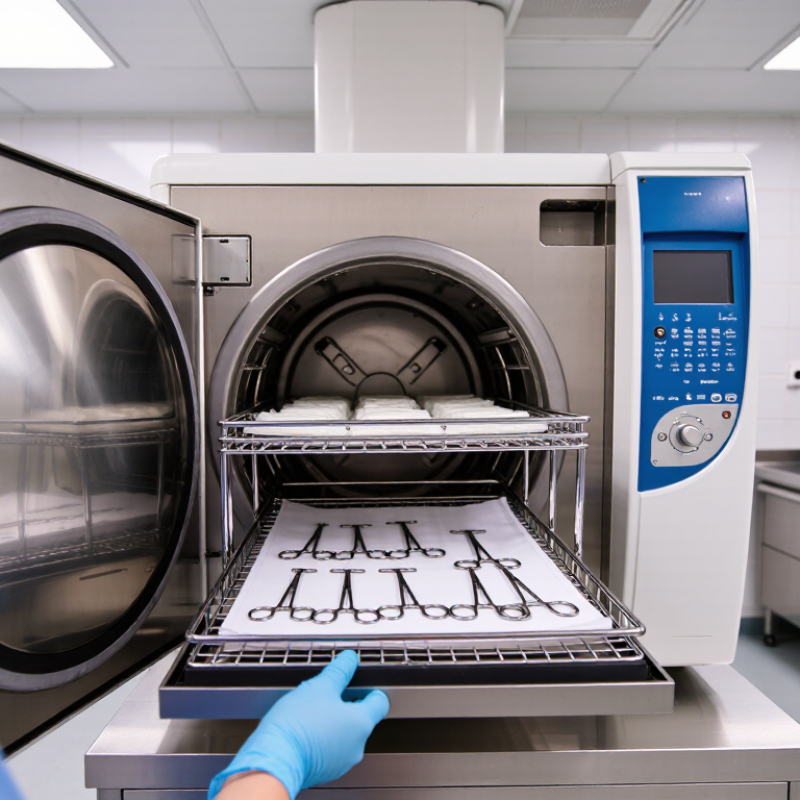
Best Steam Sterilization Temperature 121°C or 134°C?

Steam Sterilization Basics: Saturated Steam and Time–Temperature Lethality

Steam sterilization depends on saturated steam contacting every surface, not temperature alone. In the chamber, steam condenses on cooler items and releases heat, helping destroy microorganisms, including resistant spores. Air pockets matter. They block steam contact and can leave cold spots inside wrapped packs or narrow lumens. Pressure allows steam to reach temperatures above boiling, but pressure alone does not sterilize.

At 121°C, validated cycles often require longer exposure than cycles at 134°C. These temperatures are not universal recipes. The holding time begins only after the load reaches specified conditions, and dense or hollow items may heat slowly. A tray can look dry outside while its center remains underprocessed. It is easy to overtrust the chamber display; it cannot prove that every item received the required lethal exposure.

Use cycle settings validated for the device, packaging, load arrangement, and sterilizer. Follow equipment and instrument instructions, and review cycle records alongside appropriate chemical and biological indicators. If a record or indicator fails, quarantine the load and investigate rather than assuming the cycle worked. Small details matter: correct loading, clear drains, and adequate drying. Time, temperature, and steam quality work together.

Best Steam Sterilization Temperature: 121°C or 134°C?

Steam Sterilization Basics: Saturated Steam and Time–Temperature Lethality

These are illustrative exposure-phase examples: 121°C for 15 minutes and 134°C for 3 minutes. They are not universal cycle prescriptions. Exposure time starts only when the load reaches the required conditions; the appropriate cycle depends on the sterilizer, load, packaging, and validated instructions. Effective steam sterilization also requires saturated steam and adequate air removal.

EN 13060 Reference Holds: 121°C for 15 min vs 134°C for 3 min

For steam sterilization, the familiar reference holds are 121°C for 15 minutes and 134°C for 3 minutes. These are exposure times at the target temperature, not total cycle times. Heating, air removal, drying, and load conditions also matter. EN 13060 sets performance requirements and test methods for small steam sterilizers; it should not be read as a universal instruction to use one hold for every instrument. A validated cycle must match the sterilizer, packaging, and load.

The CDC’s Guideline for Disinfection and Sterilization in Healthcare Facilities reports different reference conditions: 121°C for 30 minutes in a gravity-displacement cycle, or 132°C for 4 minutes in a dynamic-air-removal cycle, for wrapped instruments. That difference is a useful warning: temperature alone does not define a cycle. The instruments, packaging, and air-removal method change the required exposure. The numbers look neat. Real loads are not. A densely packed tray can heat more slowly than an empty chamber, so follow the sterilizer’s validated instructions and verify the load’s indicators and records. Even then, cycle records deserve a second look.

CDC Wrapped-Load Benchmarks: 121°C/30 min Gravity; 132°C/4 min Prevacuum

For wrapped loads, the CDC benchmarks differ by cycle type: 121°C for 30 minutes in a gravity-displacement sterilizer, or 132°C for 4 minutes in a prevacuum sterilizer. These are exposure times, not total cycle times. The clock starts only after the load reaches the required conditions.

The difference matters. Gravity cycles remove air mainly through displacement, while prevacuum cycles use vacuum pulses to help remove air from wrapped packs. Trapped air can interfere with steam contact. A tightly packed chamber or a damp, heavy pack may also affect drying and performance. Small details count.

Treat these figures as benchmarks, not universal instructions. Check the sterilizer’s validated cycle and the instrument and packaging manufacturers’ instructions. Confirm that the selected cycle matches the load, and review physical records, chemical indicators, and biological monitoring as required by facility procedures. A printed temperature alone does not prove that every pack received adequate exposure. It is easy to focus on the headline numbers and overlook loading practice; that deserves a second look.

Compare Material Compatibility, Packaging, Load Density, and Cycle Type

Choosing 121°C or 134°C is not just a temperature decision. Material compatibility sets the boundary. Some heat-sensitive plastics, seals, or layered devices may tolerate a 121°C cycle but not 134°C. That is not guaranteed; check the device instructions and validated cycle parameters. A stainless-steel instrument may handle 134°C readily, while a delicate component may deform or age faster. Small details matter.

Packaging changes how steam reaches surfaces and how loads dry. Dense wraps, closed containers, or tightly stacked trays can slow air removal and steam penetration. A higher setpoint cannot fix poor loading. Use packaging approved for the selected cycle, and avoid compressing packs against chamber walls. Heavy or crowded loads may need different exposure and drying times than a lightly filled chamber. An apparently dry exterior can hide moisture inside.

Cycle type matters too. Pre-vacuum cycles remove air actively and suit many wrapped or porous loads when validated for that use. Gravity-displacement cycles rely on steam pushing air out and may suit different load types. At 134°C, exposure is often shorter; 121°C commonly requires more time. Exact parameters depend on the sterilizer, packaging, load, and instructions. It is tempting to treat the display as the whole story; that shortcut deserves skepticism. Investigate wet packs, failed indicators, or unusual results rather than assuming temperature alone proves sterilization.

Best Steam Sterilization Temperature: 121°C or 134°C? — Compare Material Compatibility, Packaging, Load Density, and Cycle Type

Comparison Factor 121°C Cycle 134°C Cycle Practical Selection Guidance
Typical use Common for heat-stable instruments, wrapped goods, and many liquid cycles when the sterilizer and load are validated for this temperature. Common for compatible, heat-stable instruments and porous loads processed in a validated high-temperature cycle. Neither temperature is universally best. Follow the device instructions, sterilizer instructions, and the validated cycle for the specific load.
Exposure time Often requires a longer exposure hold than a 134°C cycle. The required time varies with the cycle, load, packaging, and applicable standards. Can achieve the required lethality with a shorter exposure hold in some validated cycles. A short hold must not be assumed suitable for every load. Use the validated exposure parameters, not a generic time-temperature chart. Exposure time is only one part of the complete cycle.
Material compatibility May be preferable for items with a lower permitted temperature, provided they are explicitly rated for steam sterilization at 121°C. Higher temperature can increase the risk of damage to temperature-sensitive polymers, adhesives, coatings, or delicate assemblies. Check each item’s reprocessing instructions. A 121°C cycle is not automatically safe for a material that is not designed for steam sterilization.
Metal instruments Suitable for many compatible stainless-steel instruments when processed using the specified cycle. Also suitable for many compatible stainless-steel instruments; the higher temperature may shorten the exposure phase in some validated cycles. Consider instrument design, corrosion and drying requirements, and the manufacturer’s validated processing instructions.
Packaging compatibility Packaging must be intended for steam sterilization and validated for the selected cycle and load configuration. Packaging must withstand the higher temperature and the specific cycle conditions without losing its barrier or seal integrity. Use compatible sterilization wraps, pouches, or containers as directed. Do not assume packaging approved for one cycle is approved for another.
Load density Dense or tightly packed loads can delay steam penetration and air removal, potentially preventing adequate conditions at the hardest-to-reach locations. Higher temperature does not compensate for poor loading, trapped air, or inadequate steam penetration in a dense load. Follow loading instructions, avoid overloading, and allow space for steam circulation. Validate the actual load configuration where required.
Cycle type and air removal Gravity-displacement cycles are used for suitable loads; dynamic-air-removal cycles may be needed for wrapped, porous, or more challenging loads. Often used in dynamic-air-removal cycles for wrapped or porous loads, but the correct cycle depends on the sterilizer and load. Select the cycle type according to the load’s ability to trap air and the equipment instructions. Temperature alone does not establish cycle suitability.
Liquids Frequently used for compatible liquids in a validated liquid cycle with appropriate slow exhaust and cooling provisions. May increase boiling and pressure-related risks for liquids; it should be used only if the equipment and liquid load are specifically validated for it. Use a dedicated liquid cycle when applicable. Never process sealed containers or use a rapid exhaust setting unless the instructions explicitly permit it.
Dense or complex devices May require longer validated exposure and effective air removal, depending on device geometry and the challenge presented by the load. May be appropriate only when the device instructions and cycle validation support this temperature and configuration. For lumened, assembled, or complex devices, follow device-specific instructions for disassembly, cleaning, loading, and cycle selection.
Monitoring and release Both cycle temperatures require appropriate physical cycle records and the monitoring procedures specified by applicable regulations, standards, and facility policy. Chemical indicators alone do not prove sterility. Confirm the cycle reached its validated parameters and follow required indicator, maintenance, and load-release procedures.

Important: The values shown are general comparisons, not a processing recipe. Actual exposure times and cycle parameters vary by sterilizer, load, packaging, and applicable requirements. Always follow the device and sterilizer instructions and use a validated cycle.

Select and Verify Cycles Against Device IFUs, ISO 17665, and BI Results

Choosing 121°C or 134°C is not a temperature-only decision. Check the device instructions for use (IFU), then confirm that the sterilizer’s validated cycle suits the device, packaging, and load. A wrapped instrument set may require different exposure and drying conditions than an unwrapped item. Small details matter: a tightly packed tray, wet packaging, or trapped air can undermine an otherwise correct display reading. ISO 17665 guides the development, validation, and routine control of moist-heat sterilization processes. It does not make one cycle suitable for every device.

Review cycle records alongside physical and chemical monitoring. Biological indicator (BI) results add evidence that the process can inactivate resistant microorganisms, but they do not replace validated parameters or correct loading. Investigate an unexpected BI result, check the relevant load and records, and follow your facility’s procedures before releasing items. No cycle choice is foolproof. Even tidy paperwork can hide gradual changes in loading practice, so review how trays are actually arranged.

Tips: Match the cycle to the IFU, not habit. Check load configuration, packaging, exposure time, and drying. Keep BI results traceable to the cycle and load, and document follow-up when results are unexpected.

FAQS

Why does saturated steam matter in sterilization?

Steam condenses on cooler surfaces and releases heat. Trapped air can block contact and create cold spots. Pressure alone is not enough.

How do 121°C and 134°C cycles differ?

A 121°C cycle often needs longer exposure than a 134°C cycle. Exact settings depend on the device, packaging, load, and sterilizer. There is no universal recipe.

When does the exposure time begin?

It begins after the load reaches the specified conditions. Dense trays and hollow items may heat slowly. The display is not proof that every surface received enough exposure.

Can tightly packed trays affect sterilization?

Yes. Crowded trays, compressed wraps, or blocked drains can slow air removal and steam penetration. Leave space for steam to circulate.

Does every device tolerate a 134°C cycle?

No. Some plastics, seals, and layered devices may tolerate 121°C but not 134°C. Check the device instructions and validated cycle parameters.

What is the difference between pre-vacuum and gravity-displacement cycles?

Pre-vacuum cycles actively remove air and suit many validated wrapped or porous loads. Gravity cycles use steam to push air out. Use only the cycle validated for the load.

Do chemical and biological indicators prove a load is safe?

They provide useful evidence, but they do not replace validated settings, correct loading, or cycle records. Keep results linked to the specific load.

What should happen if an indicator or record fails?

Quarantine the load and investigate under facility procedures. Do not assume the cycle worked. A neat printout can still miss a loading problem.

Does a dry exterior mean a pack is fully processed?

Not necessarily. A tray may look dry outside while its center remains underprocessed or damp. I would question appearances here.

Conclusion

What is the best temperature for steam sterilization? There is no single answer for every instrument or load. Steam sterilization relies on saturated steam, adequate exposure time, and effective contact with all surfaces. As reference points, EN 13060 describes holds of 121°C for 15 minutes and 134°C for 3 minutes, while CDC benchmarks for wrapped loads include 121°C for 30 minutes in gravity cycles and 132°C for 4 minutes in prevacuum cycles. These times apply to specific cycle conditions and should not be treated as interchangeable.

The right cycle depends on the device’s instructions for use, material compatibility, packaging, load density, and sterilizer cycle type. Follow the applicable device instructions and ISO 17665 guidance, and verify performance through routine monitoring, including appropriate biological indicator results. A higher temperature may allow a shorter hold, but only when the validated cycle is suitable for the device and load.

Liam

Liam

Liam is a dedicated marketing professional with a profound expertise in the industry, where he excels at highlighting the unique advantages of our core products. With a keen understanding of market trends and consumer needs, Liam frequently updates our company’s professional blog, providing......