How to Dry Medical Instruments After Washing in China?

Time:2026-10-23 Author:Sophia
0%

How to dry medical instruments after washing is a critical step in safe reprocessing, especially in hospitals and clinics across China. Washing removes visible soil, but trapped moisture can support microbial survival, cause corrosion, and weaken sterilization results. A clean-looking instrument is not always a dry instrument.

William A. Rutala, PhD, MPH, a respected infection-prevention specialist, stated, “If it is not clean, it cannot be disinfected or sterilized.” His principle also guides drying. Instruments should be opened, separated, and inspected before drying. Hinges, joints, lumens, and narrow channels deserve special attention. A lint-free, low-shedding cloth can remove surface water. Medical-grade compressed air may help clear internal channels when the manufacturer permits it. Air pressure should be controlled. Excessive force may damage delicate parts or spread contamination.

Dry completely. Even a small droplet inside a lumen matters. Drying cabinets or validated washer-disinfectors can provide more consistent results than manual handling. However, equipment settings must follow the instrument manufacturer’s instructions and the facility’s approved procedures. China-based facilities should also align practices with applicable national standards, hospital protocols, and documented quality controls.

The process is not perfect. Staff may rush during busy shifts, and hidden moisture is easy to miss. That weakness requires practical checks. Inspect instruments under good lighting, record failures, and retrain when patterns appear. Reliable drying is not merely a finishing touch. It is a visible sign of disciplined infection control, careful staff work, and respect for every patient who may later depend on that instrument.
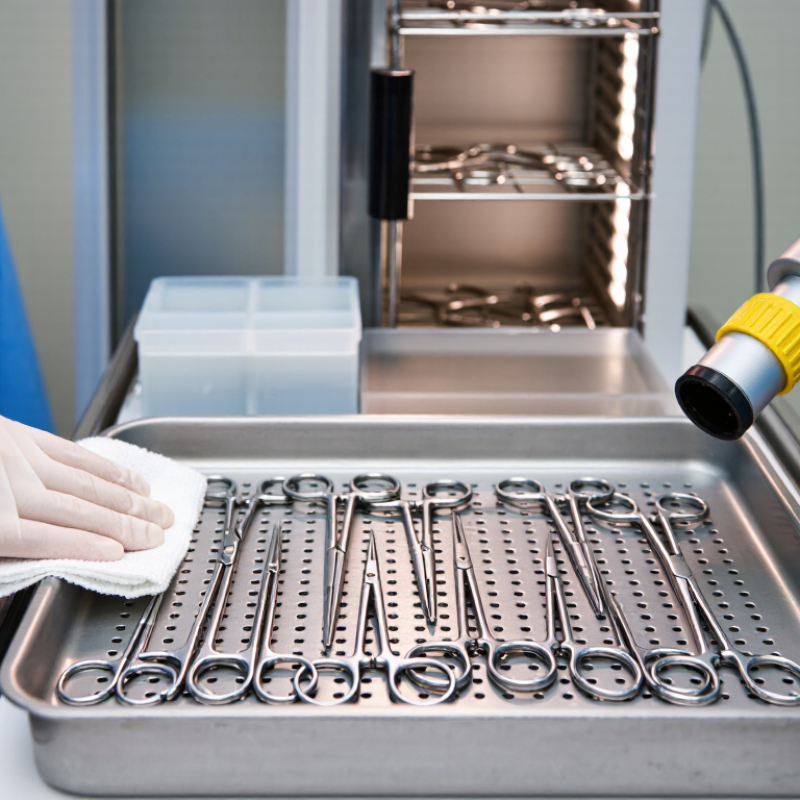
How to Dry Medical Instruments After Washing in China?

Medical Instrument Drying: Purpose, Risks, and Basic Requirements

How to Dry Medical Instruments After Washing in China?

Medical Instrument Drying: Purpose, Risks, and Basic Requirements

Drying is not cosmetic. It removes moisture that can dilute disinfectants, support microbial survival, and damage instruments during storage. The World Health Organization’s 2022 global report found healthcare-associated infections affect about 7 in 100 acute-care patients in high-income countries and 15 in 100 in low- and middle-income countries. Poor drying is not the only cause, but it is a controllable reprocessing weakness.

After washing, inspect every surface, hinge, lumen, and joint under good lighting. Use clean, oil-free medical air for internal channels, following the device manufacturer’s validated instructions. A lint-free, low-shedding cloth can dry external surfaces. Do not leave instruments in standing water. Hidden droplets inside a narrow lumen may remain after the outside looks dry.

A practical drying area should be clean, ventilated, and separated from dirty washing zones. Staff should record the cycle, operator, and any visible residue. AAMI ST79 emphasizes complete drying before packaging, because moisture can compromise package integrity and sterilization monitoring. ISO 17664-1 also requires manufacturers to define validated processing instructions for reusable devices. In China, facilities should align local procedures with these instructions and approved hospital protocols.

The uncomfortable detail is simple: “looks dry” is not a measurement. Some facilities still rely on touch or rushed visual checks. That habit deserves review. Drying time, air pressure, lumen adapters, and inspection results should be tested and documented for each instrument type.

Preparing Washed Instruments for Safe and Effective Drying

How to Dry Medical Instruments After Washing in China?

Preparing washed instruments for safe drying requires more than leaving them on a tray. In practice, residual water often hides inside hinges, lumens, and serrated surfaces. Separate instruments immediately after washing. Open hinged parts fully. Place them on a clean, perforated surface. Use lint-free, single-use wipes for accessible areas. For internal channels, use filtered medical air at a controlled pressure. Avoid forceful air that may scatter droplets or damage delicate parts.

China’s humid regions need extra attention. Room temperature, humidity, and water quality should be recorded during each drying cycle. The WHO and UNICEF JMP 2023 report states that only 78% of healthcare facilities globally had basic water services in 2022. This finding reminds facilities to verify their own water systems, not assume clean-looking water is suitable. Final-rinse water should meet the facility’s validated quality requirements. Heated drying cabinets can improve consistency, but overloaded shelves may leave cold, wet pockets. That is easy to miss.

Inspect every instrument under bright light. Check channels with clean borescope guidance when required. A dry surface is not proof of a dry lumen. The CDC sterilization guideline identifies moisture and incomplete processing as risks to safe reuse. A practical record should include operator, cycle time, temperature, and inspection result. Some teams still rely on touch alone. That habit deserves review. Validation should reflect local humidity, instrument design, and actual workload, rather than an ideal laboratory schedule.

How to Dry Medical Instruments After Washing in China?

Preparing washed instruments for safe and effective drying requires complete surface drying, attention to joints and channels, and verification before packaging or sterilization.

The chart shows practical planning times for common post-washing drying steps. Actual times depend on instrument design, load size, water quality, air pressure, drying-equipment performance, and local validated procedures. Instruments should be completely dry before inspection, packaging, or sterilization.

Step-by-Step Methods for Drying Medical Instruments in China

After washing medical instruments in China, drying should begin immediately. Water left in joints and channels can support corrosion and compromise later sterilization. Follow the facility’s reprocessing procedure and the instrument manufacturer’s instructions. Local hospital requirements and current Chinese regulations should also guide the process.

Place cleaned instruments on a perforated tray and keep hinged parts open. Let excess water drain first. Use a clean, low-lint cloth on outer surfaces, without rubbing delicate tips. For lumened instruments, flush with filtered or approved compressed air until no droplets appear. A drying cabinet can provide controlled warm air, but excessive heat may damage plastics, seals, or coatings. Keep the temperature within the approved range.

Inspect every item under strong lighting. Check joints, grooves, channels, and screw areas. Moisture can hide there. Packaging should wait until the instruments are completely dry. This matters.

A common mistake is relying on a quick towel wipe. The surface may look dry while internal water remains. A practical improvement is to rotate hinged tools during drying and repeat the air purge. Record unusual corrosion, blocked channels, or incomplete drying for review. Do not release doubtful instruments for sterilization. The process is not perfect every time, so staff should regularly verify drying equipment, air quality, tray loading, and their own technique.

How to Dry Medical Instruments After Washing in China? - Step-by-Step Methods for Drying Medical Instruments in China
Step Drying Method Recommended Parameters and Process Advantages Risks and Quality Controls Recommended Use
1 Drain and Inspect Place washed instruments in an open, perforated basket. Keep hinged instruments open and separate items by type. Inspect joints, lumens, serrations, and insulated surfaces for visible water or residue. Removes pooled water before active drying and helps identify instruments that need additional cleaning. Do not stack wet instruments tightly. Rewash any item with visible soil, detergent residue, or retained debris rather than proceeding to drying.
2 Manual Drying Use a clean, low-lint, disposable or dedicated medical-grade cloth. Dry external surfaces first, then joints, box locks, serrations, and handles. Use a suitable narrow, lint-free accessory for accessible lumens. Simple, inexpensive, and useful for removing surface moisture immediately after rinsing. Cloth fibers can remain on instruments, and excessive rubbing may damage delicate tips. Do not use visibly contaminated or repeatedly reused cloths.
3 Filtered Compressed Air Blow air through hinges, joints, serrations, and lumens using clean, dry, oil-free, medical-use compressed air. Apply pressure and accessories according to the instrument and facility procedure. Efficiently removes water from narrow spaces and internal channels that are difficult to dry with a cloth. Unfiltered or oily air may contaminate instruments. Excessive pressure can create aerosols, dislodge small parts, or damage delicate devices. Use appropriate splash and personnel controls.
4 Warm-Air Cabinet or Drying Cabinet Arrange instruments with adequate spacing and keep hinged devices open. Use a validated cycle within the temperature limits specified by the instrument manufacturer. Confirm that instruments are completely dry before packaging or storage. Provides controlled, repeatable drying for larger batches and reduces dependence on manual wiping. Excessive temperature may damage plastics, seals, coatings, or insulation. Overloading restricts airflow and can leave moisture in joints and lumens.
5 Washer-Disinfector Drying Cycle Use the equipment’s validated drying phase after cleaning and thermal or chemical disinfection. Load baskets to permit water drainage and airflow; connect or position cannulated devices as required by the equipment instructions. Integrates cleaning, disinfection, and drying in a documented automated workflow while limiting manual handling. A completed cycle does not guarantee dryness if loading is incorrect, filters are blocked, or the drying phase is unsuitable. Inspect instruments before release.
6 Lumens and Internal Channels Flush and dry channels using a validated method compatible with the device. Use filtered air, appropriate drying adapters, or a validated automated process. Verify that no droplets remain at openings or low points. Reduces retained moisture, which can support microbial growth, cause corrosion, and interfere with sterilization or disinfection. Inadequate channel drying is a common cause of residual moisture. Do not improvise tools that may scratch or shed fibers inside the lumen.
7 Final Inspection and Release Check external surfaces, joints, cavities, and lumens under adequate lighting. Confirm that instruments are dry, clean, intact, and functional. Record the process when required by the facility quality system. Prevents wet or damaged instruments from entering packaging, sterilization, storage, or clinical use. Do not package instruments with visible moisture. Remove damaged or corroded items from service for evaluation, repair, or disposal according to local procedures.
Important: Drying temperature, air pressure, chemical compatibility, and handling requirements must follow the instrument manufacturer’s instructions and the healthcare facility’s validated reprocessing procedure. In China, facilities should also align their process with applicable national standards, regulatory requirements, and infection-prevention procedures.

Selecting Drying Equipment for Different Instrument Materials

How to Dry Medical Instruments After Washing in China?

Selecting drying equipment starts with the instrument material, not the machine’s advertised temperature. Stainless-steel forceps usually tolerate filtered hot air, provided joints remain open and surfaces avoid chloride residue. Aluminum instruments need gentler heat and careful water-quality control because alkaline residues can stain or pit them. Polymer components, insulation, and delicate optical parts may require low-temperature drying or filtered ambient air. Always check the manufacturer’s instructions for use. A common mistake is treating every instrument like steel.

For hollow devices, cabinet drying alone may leave droplets inside narrow channels. Use validated air connections, suitable adapters, and clean, oil-free compressed air where permitted. The air should be HEPA-filtered and monitored for pressure and temperature. In China, equipment records should capture cycle time, temperature, alarms, and operator checks. The CDC’s Guideline for Disinfection and Sterilization, updated in 2024, stresses thorough drying before storage because residual moisture supports recontamination and corrosion.

Drying quality affects infection prevention. The WHO’s 2022 Global Report on Infection Prevention and Control reports that effective IPC programs can reduce healthcare-associated infections by up to 70%. That figure reflects complete systems, not drying alone. Still, drying is often underestimated. I have seen teams increase heat when instruments remain wet, although better loading and channel access may solve the problem. Measure dryness, inspect hinges, and review failed cycles instead of relying only on appearance. Some trays look dry outside. Their lumens may disagree.

Inspecting, Storing, and Documenting Dried Medical Instruments

How to Dry Medical Instruments After Washing in China?

After washing, medical instruments should be dried completely before inspection and storage. Water droplets can hide soil inside hinges, lumens, and serrations. In practice, a clean, lint-free cloth and filtered air help remove moisture without damaging delicate surfaces. Instruments should be checked under bright lighting. Look for stains, cracks, corrosion, loose joints, and remaining water.

Documentation matters as much as appearance. Record the date, washer or manual cleaning method, operator, drying result, inspection findings, and storage location. AAMI ST79 emphasizes controlled processing and traceability for reusable medical devices. The CDC also treats wet sterile packs as compromised because moisture can allow contamination. This is not merely paperwork.

Storage areas in Chinese healthcare facilities should remain clean, dry, and protected from dust. Keep instruments off the floor and away from sinks or splash zones. Use labeled trays or sealed packaging according to the facility’s validated procedure. WHO’s 2022 global report estimated healthcare-associated infections in 7 of 100 patients in high-income countries and 15 of 100 patients in low- and middle-income countries. Drying alone cannot prevent infection. Still, it removes one avoidable weakness.

A rushed wipe is not a validated process. A paper log can still hide a weak inspection. Supervisors should review repeated moisture findings and retrain staff when patterns appear.

FAQS

Why should washed medical instruments be separated before drying?

Separate them immediately after washing. Open hinges fully. This exposes trapped water around joints and serrated surfaces.

How can staff dry instrument surfaces safely?

Place instruments on a clean, perforated surface. Use lint-free, single-use wipes on accessible areas. Avoid rough cloths.

How should hollow instruments and narrow channels be dried?

Connect validated air adapters when available. Use filtered, oil-free medical air at controlled pressure. Forceful air can scatter droplets or damage parts.

What extra drying concerns apply in humid regions of China?

Record room temperature and humidity during each cycle. Humid air can slow evaporation. Local conditions matter more than an ideal schedule.

Does a dry exterior prove that an instrument is completely dry?

No. A dry surface proves little. Check hinges, channels, and lumens under bright light. Use suitable internal inspection when required.

Should every instrument use the same drying temperature?

No. Stainless steel often tolerates filtered hot air. Aluminum, polymers, insulation, and optical parts may need gentler drying.

What should staff consider when using a drying cabinet?

Avoid overloading shelves. Crowded trays can create cold, wet pockets. Check the instrument instructions and review incomplete cycles.

What records should a drying process include?

Record the operator, cycle time, temperature, alarms, and inspection result. Include water-quality checks when required. Touch alone is not enough.

What should staff do when instruments remain wet after drying?

Do not simply increase the heat. Improve loading, open joints, and check channel access. Our process may still need review.

Conclusion

How to dry medical instruments after washing is an essential part of safe reprocessing in China. Proper drying helps prevent moisture-related contamination, corrosion, staining, and damage to delicate components. Before drying, instruments should be checked for remaining soil, rinsed appropriately, opened or disassembled according to their design, and arranged so that water can drain from joints, channels, and hollow areas. Staff should use clean handling practices and follow the facility’s approved procedures.

Drying methods should match the instrument’s material and structure. Lint-free wipes, filtered air, drying cabinets, or specialized systems may be used, while heat and air pressure must be controlled for sensitive items. After drying, each instrument should be inspected for visible moisture, cleanliness, function, and surface damage. Completely dry instruments should be stored in a clean, protected environment and documented through appropriate records, including processing details, inspection results, and any problems requiring corrective action.

Sophia

Sophia

Sophia is a dedicated marketing professional with an exceptional depth of knowledge about her company's products and services. With a keen understanding of market trends and customer needs, she crafts insightful blog posts that not only inform but also engage readers, enriching the company’s online......