How to Implement a CSSD Workflow Efficiently?

Time:2026-10-01 Author:Aria
0%

How to implement a CSSD workflow efficiently is a practical question for every sterile processing department. Efficiency cannot mean moving instruments faster. It must protect patients, staff, and the integrity of every reusable device. A reliable workflow connects collection, decontamination, inspection, assembly, packaging, sterilization, storage, and distribution. Each stage needs clear responsibilities, controlled movement, and documented checks.

The process begins with physical separation between dirty and clean areas. Used instruments should arrive in closed, labeled containers with accurate point-of-use information. Staff need suitable personal protective equipment, validated equipment, and current manufacturer instructions for use. Small details matter. A damaged tray can delay surgery. An unreadable label can weaken traceability. Barcode scanning, load records, biological monitoring, and routine equipment maintenance support dependable decisions. However, technology cannot repair poor training or unclear handovers. Human judgment still matters.

A strong CSSD team reviews delays, wet packs, missing instruments, and failed quality checks without hiding uncomfortable findings. Daily huddles can reveal practical problems, such as crowded worktables or confusing transport routes. External standards and internal audits provide authority, but local evidence should guide improvements. No workflow is perfect. An efficient department tests changes, measures results, and corrects weak points before they become repeated risks. Staff feedback deserves attention, even when it challenges an established routine. By combining validated methods, skilled employees, visible documentation, and continuous reflection, healthcare organizations can build a CSSD workflow that is safer, clearer, and more consistent.
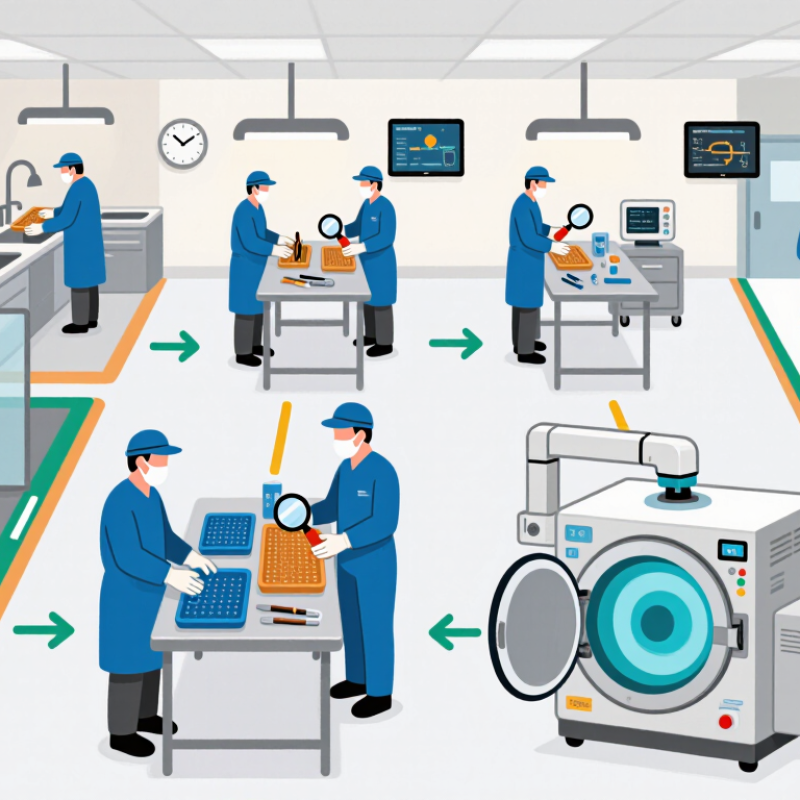
How to Implement a CSSD Workflow Efficiently?

Define CSSD Roles, Zones, and Workflow Requirements

How to Implement a CSSD Workflow Efficiently?

An efficient CSSD workflow begins with clearly defined roles, physical zones, and documented requirements. The department manager oversees staffing, equipment qualification, audits, and corrective actions. Decontamination technicians handle used devices, while assembly staff inspect, count, and package clean instruments. Sterilization operators monitor cycle records and release loads only after reviewing required indicators. Everyone needs verified training, not just a signed attendance sheet.

The layout should support one-way movement from dirty to clean to sterile storage. The decontamination zone requires appropriate barriers, hand hygiene facilities, ventilation, and visible instructions. The clean assembly area needs bright lighting, inspection tools, worktables, and controlled traffic. Sterile storage should remain dry, orderly, and protected from unnecessary handling. Clear labels reduce confusion at every handoff. Small details matter.

Each workflow requirement should be measurable. Record the receipt time, cleaning method, inspection result, packaging status, sterilization cycle, and release decision. Use traceable records that connect instruments with the department, load, and operator. Regular observation can reveal delays, repeated handling, or unsafe shortcuts. In practice, no workflow is perfect. A crowded trolley may still block a corridor, or staff may bypass a form during a busy shift. These moments deserve review, not blame. Adjust staffing, layout, or instructions when evidence shows a recurring weakness. A short daily huddle can expose problems before they affect patient care.

Map the Instrument Collection and Decontamination Process

How to Implement a CSSD Workflow Efficiently?

Map the instrument collection and decontamination process as one connected pathway. At the procedure room, staff should remove visible soil immediately. A moist towel and approved pretreatment can prevent drying during transport. Record the collection time, location, tray number, and responsible staff member. Use closed, leak-resistant containers for every transfer. The route should move in one direction, from dirty collection to clean assembly. Never allow used instruments to cross finished sets. Small details matter.

The World Health Organization reports that healthcare-associated infections affect about 7 in 100 acute-care patients in high-income countries. The rate rises to 15 in 100 in low- and middle-income countries. This makes reliable decontamination mapping a patient-safety issue, not only an efficiency project. In the decontamination room, separate receiving, sorting, washing, rinsing, and drying zones physically. Follow each instrument’s validated instructions for cleaning, water quality, temperature, and contact time. The Association for the Advancement of Medical Instrumentation recommends documenting critical processing parameters under its ST79 guidance. A practical map should show every handoff and waiting point. Add barcode or manual records where available. Review missing timestamps weekly. We often assume a delayed tray is a staffing problem, but unclear routing may be the real cause. Some maps look perfect on paper. Observe the workflow during a busy shift. That is where weak controls appear.

CSSD Workflow: Instrument Collection and Decontamination Process

The chart maps the main CSSD workflow stages and shows an illustrative average processing time per instrument batch. Decontamination activities, including manual cleaning and automated cleaning/disinfection, typically require the largest share of workflow time.

Processing times vary according to instrument complexity, soil level, equipment capacity, and local validated procedures. Instruments should remain separated from clean and sterile areas throughout the workflow.

Establish Inspection, Assembly, Packaging, and Labeling Steps

An efficient CSSD workflow starts with disciplined inspection, assembly, packaging, and labeling. The process protects patients before instruments reach the operating room.

The World Health Organization reported in 2022 that about 7 in 100 acute-care patients in high-income countries acquire a healthcare-associated infection. Sterile processing cannot remove every risk, but it can reduce preventable failures.

Inspection should occur under strong lighting, with magnification when needed. Staff should check cleanliness, alignment, function, and corrosion. Hinged instruments need special attention. A small residue near a joint can compromise cleaning and sterilization.

Assembly should follow the manufacturer’s validated instructions and the facility’s written procedures. Keep sets consistent. Count instruments against a standardized list. Do not overfill trays, because dense arrangements can block contact with sterilant.

Packaging requires the correct material, seal, and size. Place chemical indicators where sterilant penetration may be difficult. Inspect every seal for wrinkles, channels, or incomplete closure.

Labels should show the load number, sterilizer, cycle date, contents, and responsible operator. The label must remain readable after processing and storage.

AAMI ST79 emphasizes documented quality control and traceability throughout steam sterilization. That sounds straightforward. It is not always practiced well.

A practical audit may find rushed inspections, unclear handwriting, or trays assembled from memory. These weaknesses deserve correction, not blame.

Observe the workflow, review failed indicators, and retrain staff using real examples. Perfect compliance is unlikely. Consistent review is essential.

Standardize Sterilization, Load Monitoring, and Release Procedures

How to Implement a CSSD Workflow Efficiently?

A reliable CSSD workflow begins with standardization. Define each step from point-of-use collection to sterile storage. Use written instructions, visible status labels, and a clear handoff record.

The CDC reports that one in 31 hospitalized patients has at least one healthcare-associated infection on any given day. This risk makes processing discipline essential, not optional.

Cleaning must be verified before packaging. Inspect hinges, lumens, and joints under adequate lighting. Small residue can undermine the entire load.

Load monitoring should combine physical, chemical, and biological evidence. Record time, temperature, pressure, and cycle identification for every sterilizer load. Place indicators where air removal or sterilant contact may be difficult.

AAMI ST79 recommends routine monitoring and documented review before release. Never release a questionable load because the operating room is waiting. That pressure is real. It is also dangerous.

A practical release check should confirm the cycle printout, indicator results, package integrity, and operator initials. Electronic records improve traceability, but they do not replace judgment.

Tips: Keep failed-load procedures beside the sterilizer. Use color-coded tags for quarantined items. Audit a sample of records every week.

WHO estimates that seven in 100 hospitalized patients in high-income countries acquire healthcare-associated infections. The figure is higher in lower-resource settings. These numbers are broad, not CSSD-specific, but they show why weak controls matter.

Review near misses, too. A workflow can look compliant while hiding delays, unclear ownership, or repeated mistakes. Perfect standardization is unlikely; honest review keeps it improving.

Track Storage, Distribution, Documentation, and Continuous Improvement

An efficient CSSD workflow begins with visible storage control.

Sterile packs need labeled locations, release dates, and event-related status. Use first-expiring stock first. Keep clean and contaminated routes physically separate.

The WHO’s 2022 Global Report on Infection Prevention and Control states that 7 in 100 patients in high-income hospitals acquire at least one healthcare-associated infection. In lower-income settings, the estimate rises to 15 in 100.

Storage discipline supports infection prevention, not just inventory accuracy.

Distribution should follow a documented handoff.

Record the tray identifier, destination, dispatch time, and receiving staff member. Barcode scanning can reduce transcription errors, but it cannot replace visual checks. Staff should confirm package integrity before use.

The CDC’s Guideline for Disinfection and Sterilization recommends monitoring sterilization processes with mechanical, chemical, and biological indicators. Keep those results linked to each load.

Paper records remain useful, although they are slow to audit.

Continuous improvement needs practical measures.

Track missing trays, delayed deliveries, wet packs, failed indicators, and reprocessing errors each month. Review trends with operating-room and CSSD teams.

Small changes often matter. One storage shelf may cause repeated delays. Our workflow may look controlled while staff still bypass documentation during peak hours. That weakness deserves attention.

A 2023 WHO patient-safety report emphasizes learning systems, transparent reporting, and local improvement. Test one change, measure the result, and revise the process when evidence disagrees.

FAQS

Who should oversee CSSD workflow performance?

The department manager oversees staffing, equipment qualification, audits, and corrective actions. Problems need review, not blame.

What roles should CSSD staff perform?

Decontamination technicians manage used devices. Assembly staff inspect, count, and package clean instruments. Sterilization operators review cycle records before releasing loads.

How should CSSD zones be arranged?

Movement should go from dirty to clean to sterile storage. Physical barriers, hand hygiene points, ventilation, and clear signs support separation.

What should the clean assembly area contain?

It needs bright lighting, inspection tools, suitable worktables, and controlled traffic. A missing tool can cause repeated handling.

Which records should each workflow include?

Record receipt time, cleaning method, inspection result, packaging status, sterilization cycle, and release decision. Link records to the load and operator.

How can staff verify sterilization results?

Review mechanical, chemical, and biological indicators for each load. Release equipment only after required results are checked. Do not trust appearance alone.

How should sterile items be stored and distributed?

Keep sterile packs dry, labeled, orderly, and protected from unnecessary handling. Record the tray, destination, dispatch time, and receiving staff member.

What should staff do when workflow weaknesses appear?

Track wet packs, missing trays, delayed deliveries, failed indicators, and reprocessing errors. Test one change, measure it, and revise the process when evidence disagrees.

Can technology replace staff checks?

Barcode scanning can reduce transcription errors. It cannot replace visual package inspection. Paper records remain useful, but audits become slower.

How can daily operations improve during busy shifts?

Hold a short daily huddle. Discuss blocked corridors, skipped forms, and crowded trolleys. Some shortcuts may seem harmless. They still deserve attention.

Conclusion

How to implement a CSSD workflow efficiently begins with clearly defined responsibilities, controlled work zones, and documented requirements for each stage. The process should map instrument collection from clinical areas through safe transport and decontamination, while separating contaminated, clean, and sterile activities to reduce cross-contamination risks. Staff should follow consistent procedures for inspection, functional checks, assembly, packaging, labeling, and preparation for sterilization.

An effective workflow also requires standardized sterilization cycles, load monitoring, and documented release criteria before processed items return to service. After sterilization, instruments should be stored in suitable conditions, tracked by batch or load records, and distributed according to documented requests and priority needs. Regular audits, staff training, equipment checks, incident reviews, and performance indicators can reveal delays or errors and support continuous improvement. Clear documentation throughout the workflow strengthens traceability, accountability, and patient safety while helping the CSSD operate consistently and efficiently.

Aria

Aria

Aria is a dedicated marketing professional with a deep passion for innovative strategies and a keen understanding of our company's product offerings. With a wealth of experience in the industry, Aria excels at crafting engaging content that highlights the unique features and benefits of our......