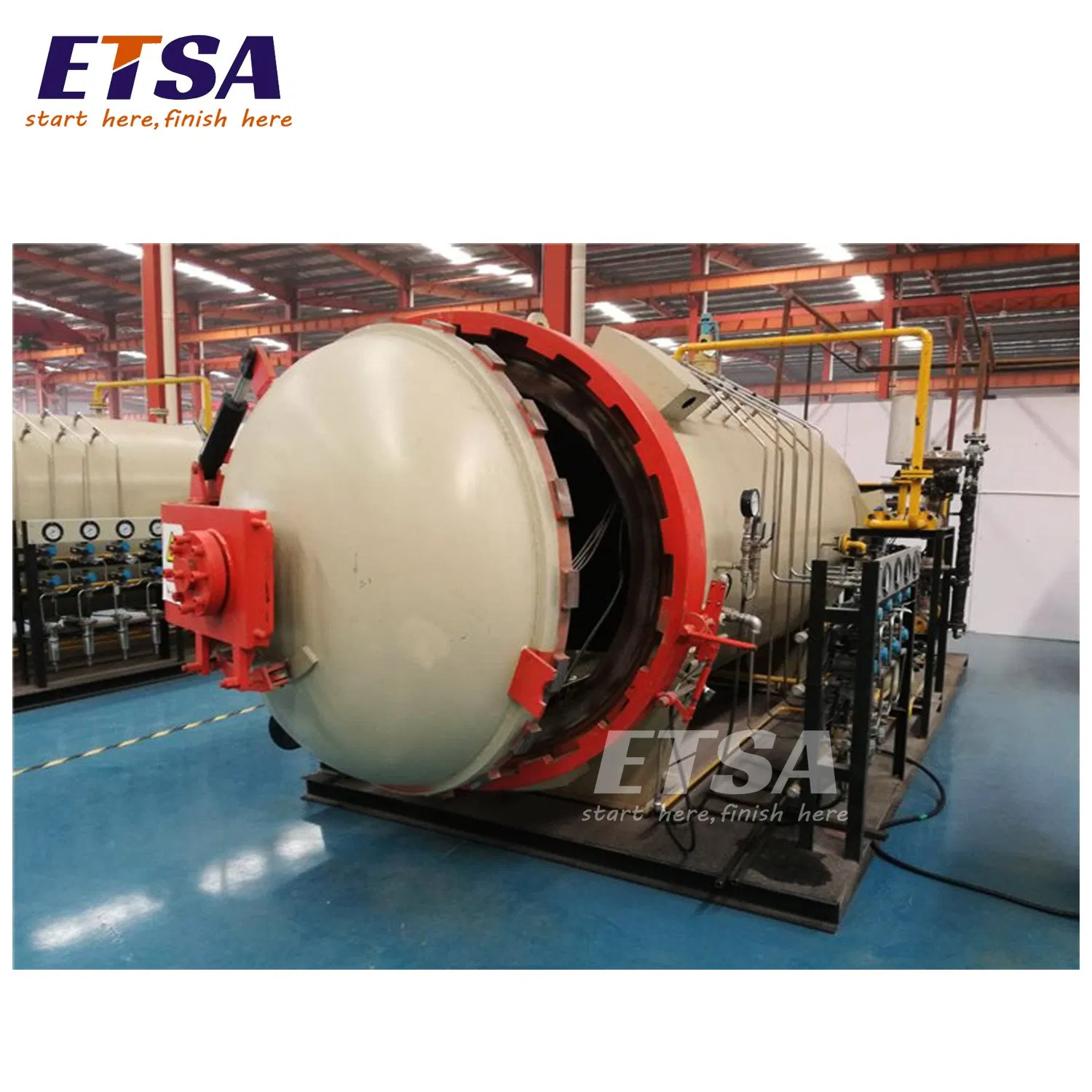
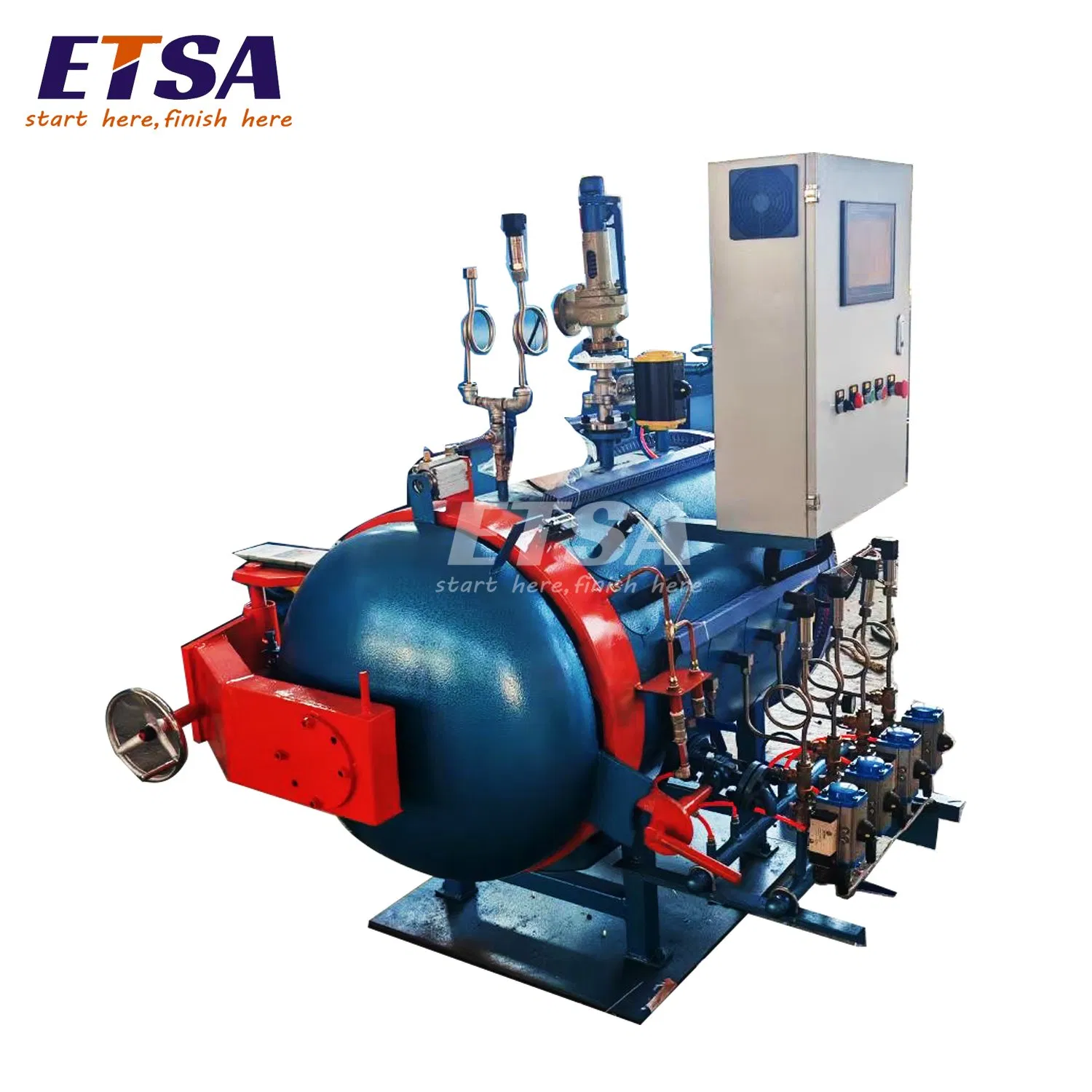
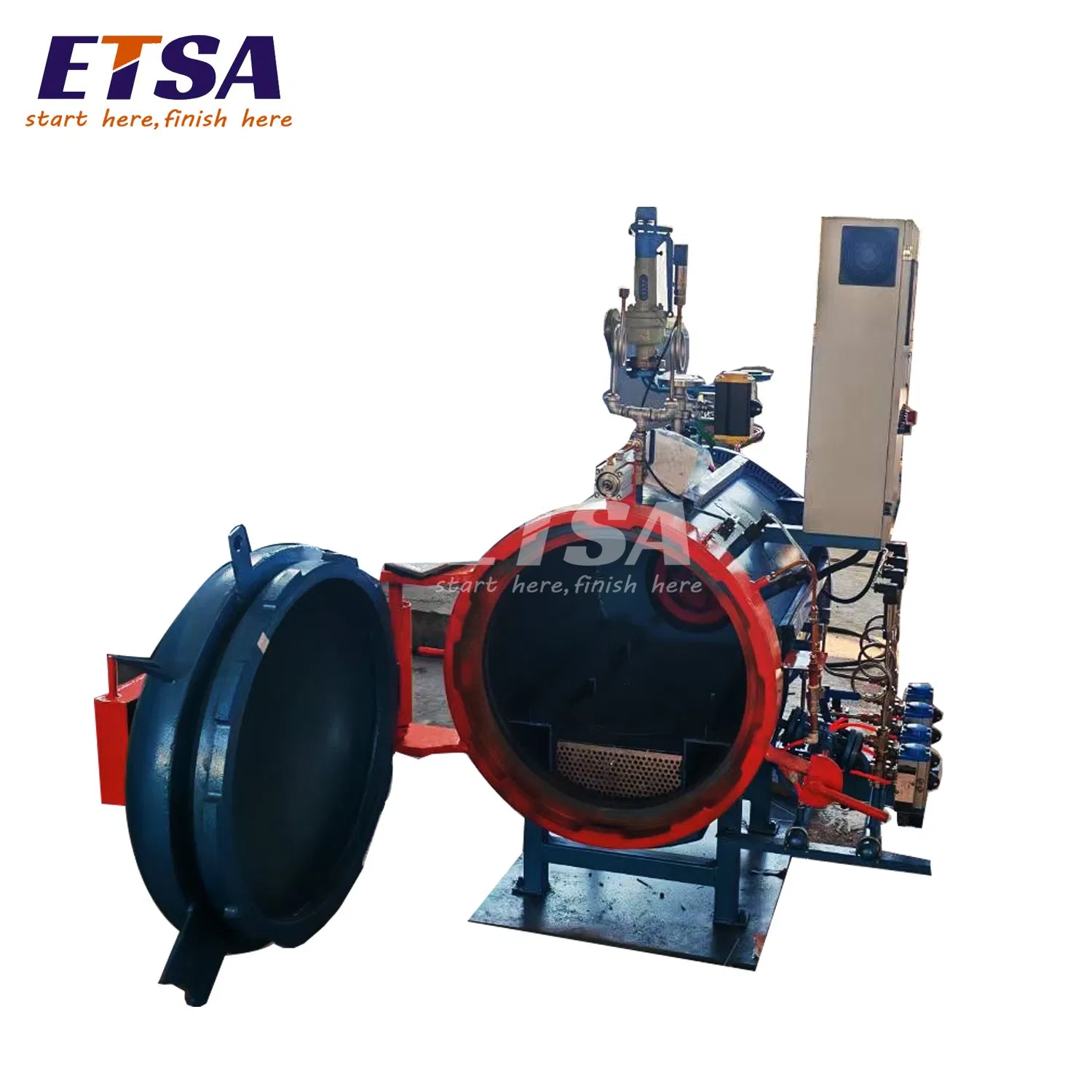
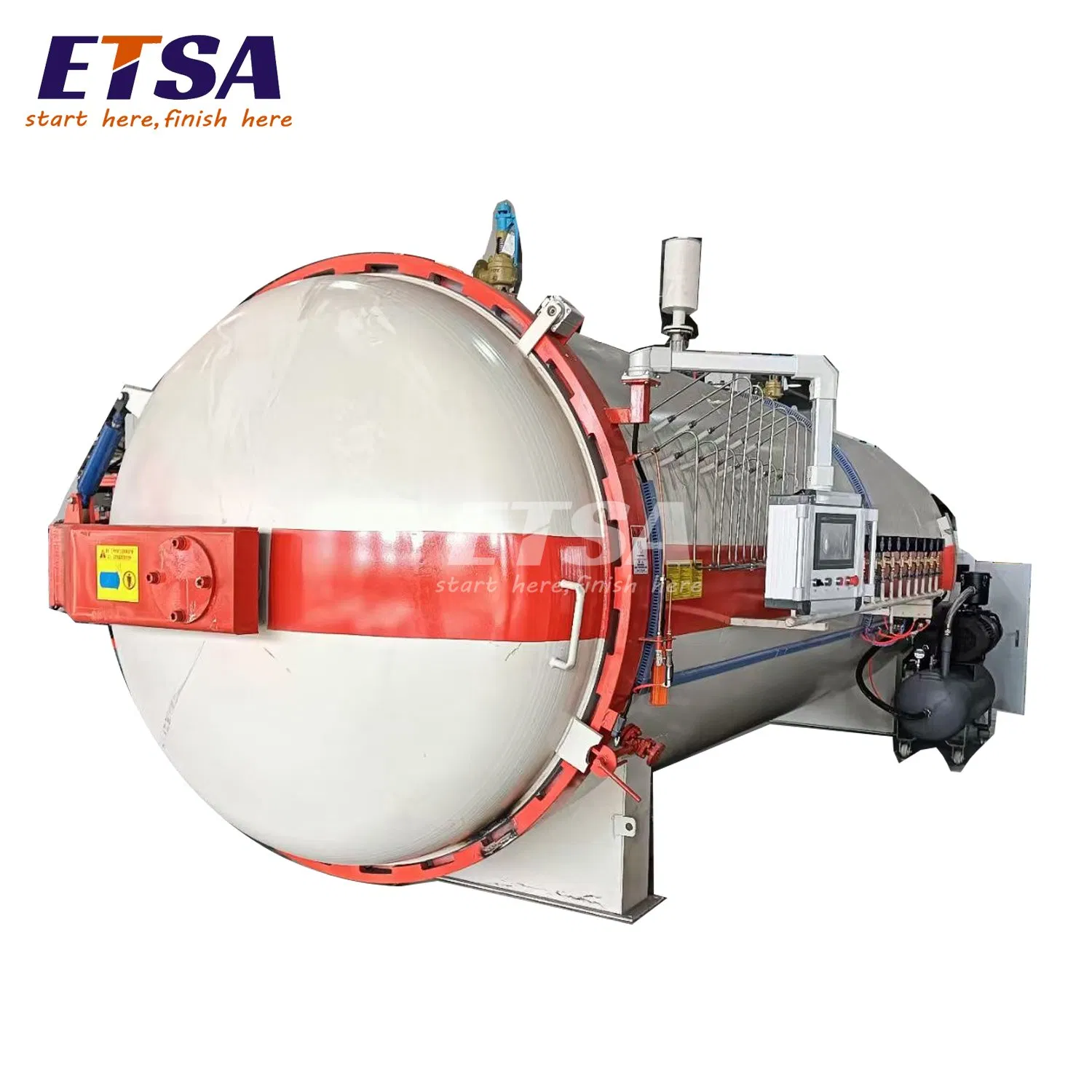
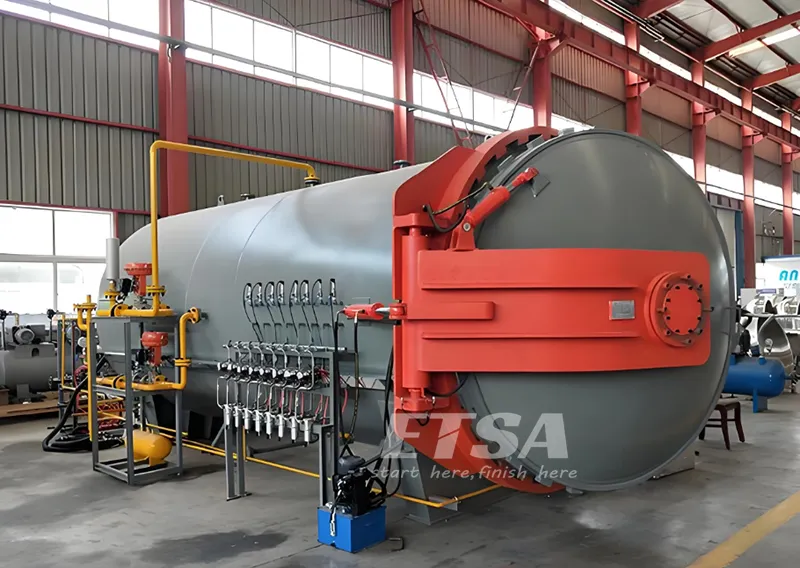
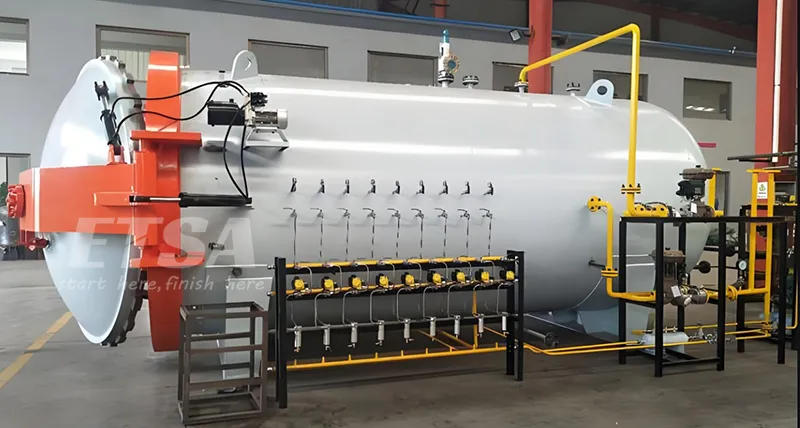
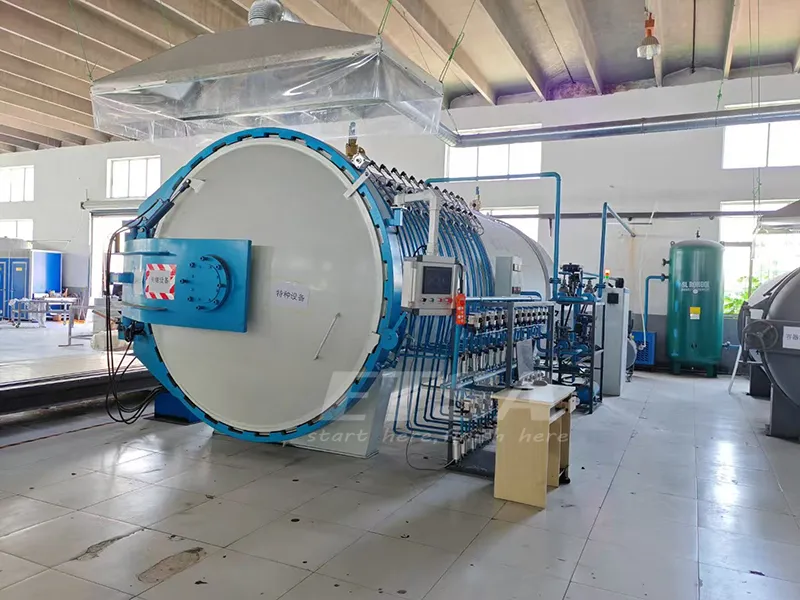
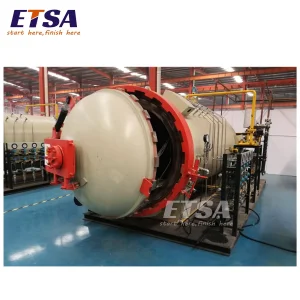
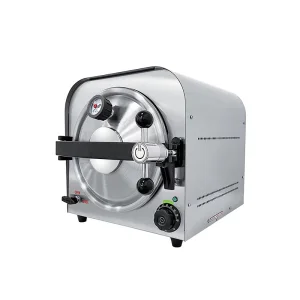
Best Quality Promotional Composite Curing Carbon Fiber Autoclave Used for Carbon Fiber Bicycles/Automotive Accessories

Customization: Available
After-sales Service: Free Spare Parts, Field Installation, Commissioni
Warranty: 2 Years

Product Description

Basic Specifications
Model NO.
ETSA-CA
Function
High Temperature High Pressure Composite Autoclave
Application
Composite Material Curing
Material
Q345r/Q370r Carbon Steel
Pressure
1.6MPa≤p<10.0MPa
Condition
New
Core Components
PLC, Engine, Gearbox, Pressure Vessel
Key Selling Points
Accurate Temperature Control
Control System
Automatic with Siemens PLC
Heating Method
Electric Heating
Product Description
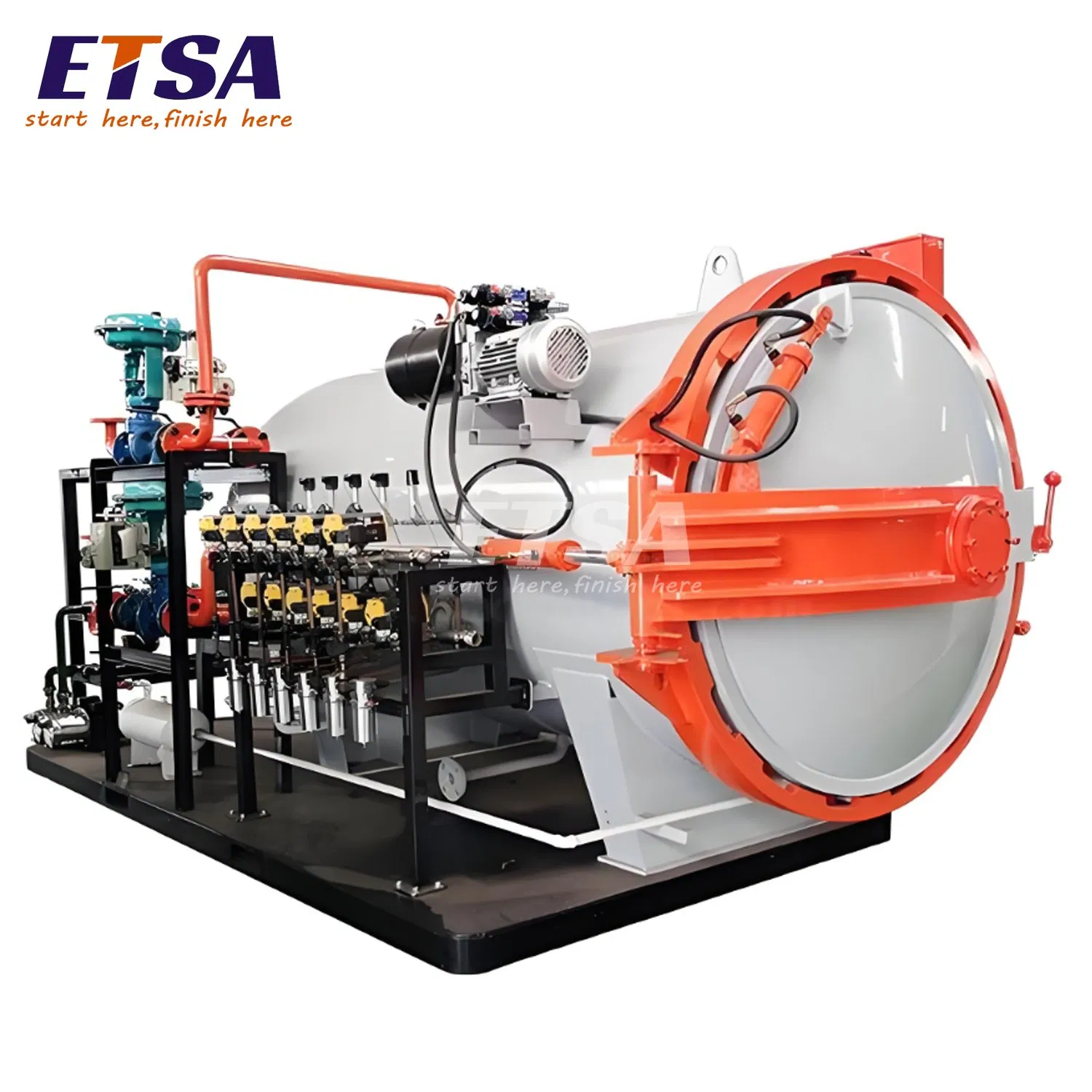
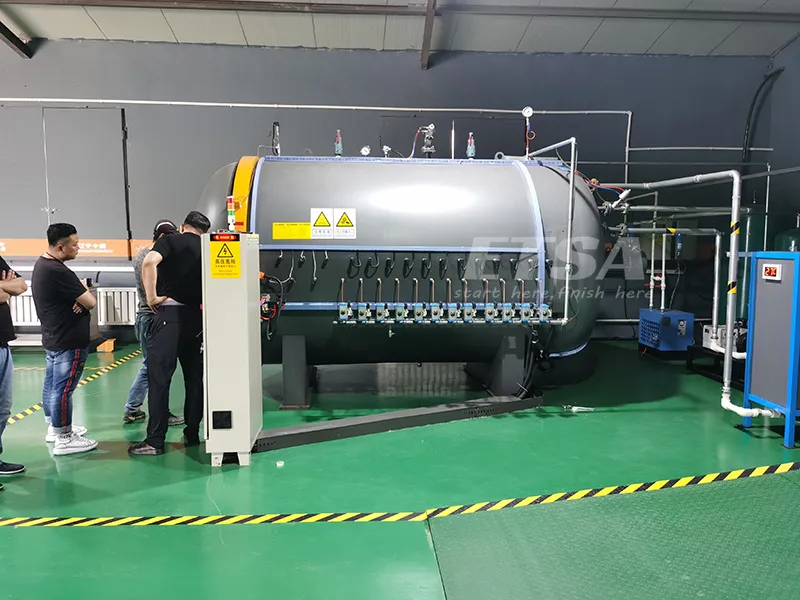
Composite Curing Autoclave

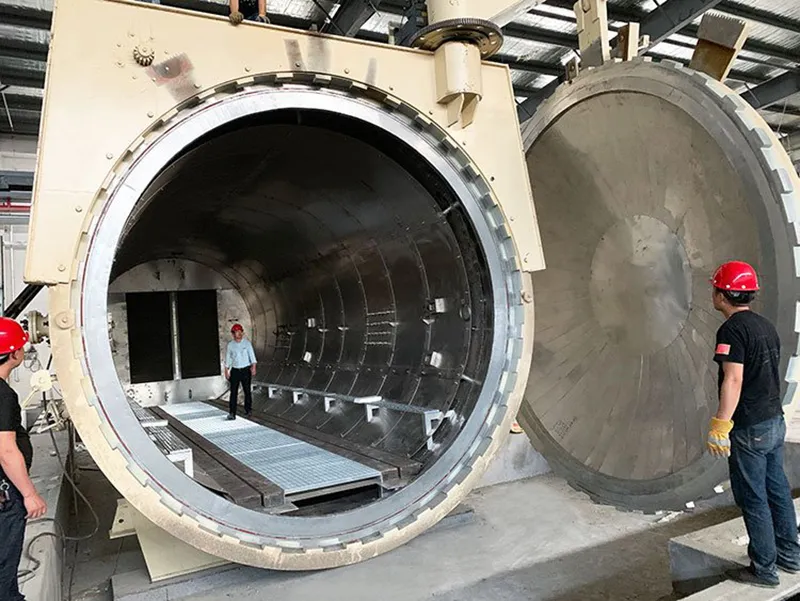
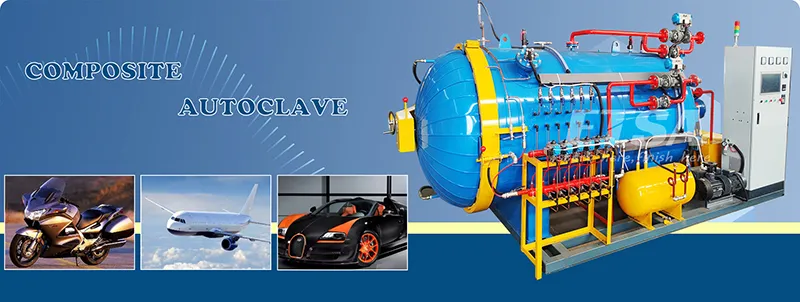
A composite autoclave is a specialized pressure vessel designed and manufactured for fabricating composite materials. Made from constituent materials with distinct properties, composites require precise elevated temperature and pressure for optimal characteristics. The industrial composite autoclave is the most effective technique for high-quality composite production. During the manufacturing process, the mold set is placed inside the autoclave where it undergoes controlled curing to form both surfaces of the panel.
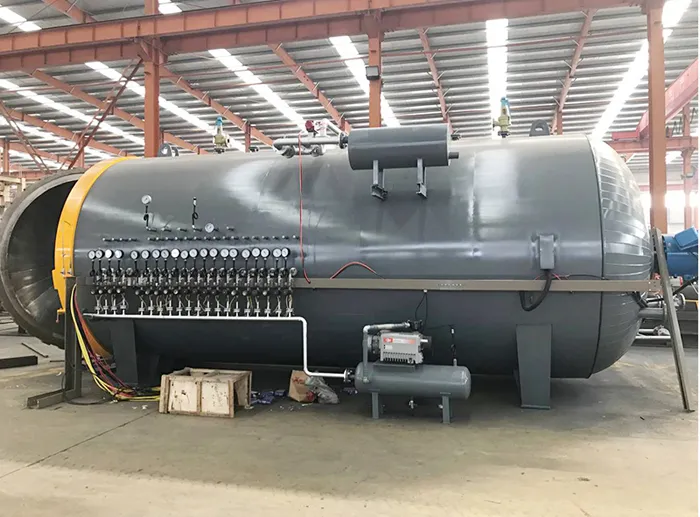
Industrial Autoclave
Autoclave Lab
System Composition

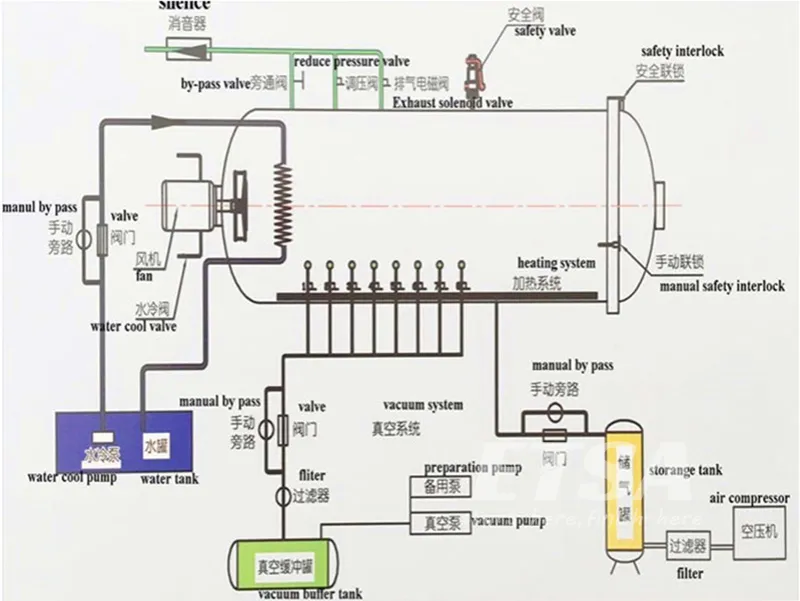
The High Pressure Composite Autoclave consists of ten integrated systems:
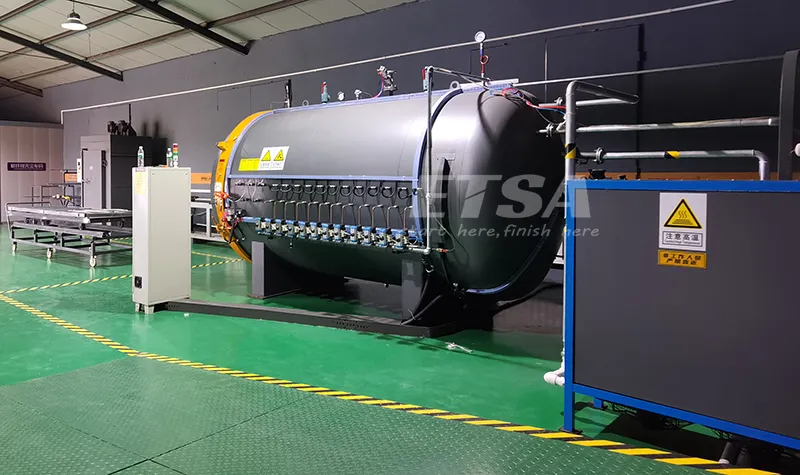
  • Vessel Tank and Door Sealing Device
  • Advanced Heating and Cooling Systems
  • High-Accuracy Pressure and Vacuum Systems
  • Air Source and Integrated Safety Systems
  • Siemens Automatic Control System
  • Auxiliary Supporting Systems
System details
Applications & Key Advantages

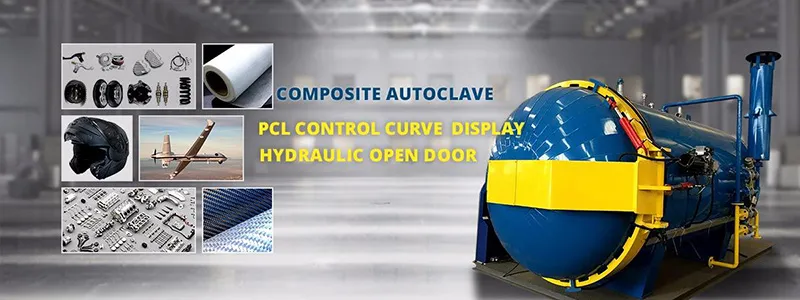
Primarily used for high-temperature and high-pressure processing of composite materials for space vehicles, aerospace components, and strengthening carbon fiber or glass fiber products.
Composite Curing
Carbon Fiber Processing
  • Energy Efficiency: Siemens automatic control system reduces manpower and energy consumption.
  • Uniformity: Consistent heat distribution and constant pressure within the tank.
  • Precision: PLC control accuracy up to ±1-2ºC for optimal forming effects.
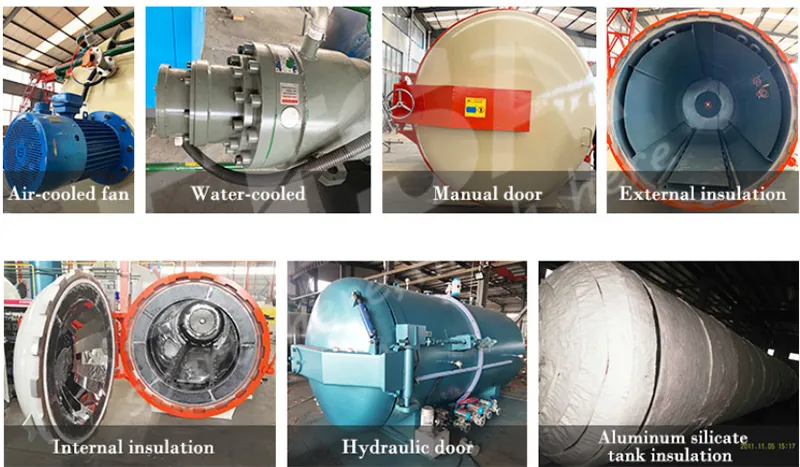
  • Insulation: High-grade aluminum silicate wool and double-layer head insulation with stainless steel lining.
  • Safety: Quick-opening pressure vessel with double safety interlock and synchronous alarms.
Technical Parameters
Design Parameter Specifications
Effective Diameter500-4500mm
Effective Length1000-20000mm
Working Temperature100-450ºC
Working Pressure0.5-5.0Mpa
Pressure Raising Speed0.1Mpa/min (adjustable)
Temperature Raising/Lowering Speed0.5-7 ºC/min (adjustable)
Temperature Accuracy±1.2 ºC
Cooling MethodsWater Cooling / Wind Cooling
Vacuum Degree-0.098Mpa (absolute)
Continuous Working Ability≥ 50 hours
Detailed Equipment Photos
Detail 1
Detail 2
Detail 3
Detail 4
Detail 5
Detail 6
Manufacturing Facility
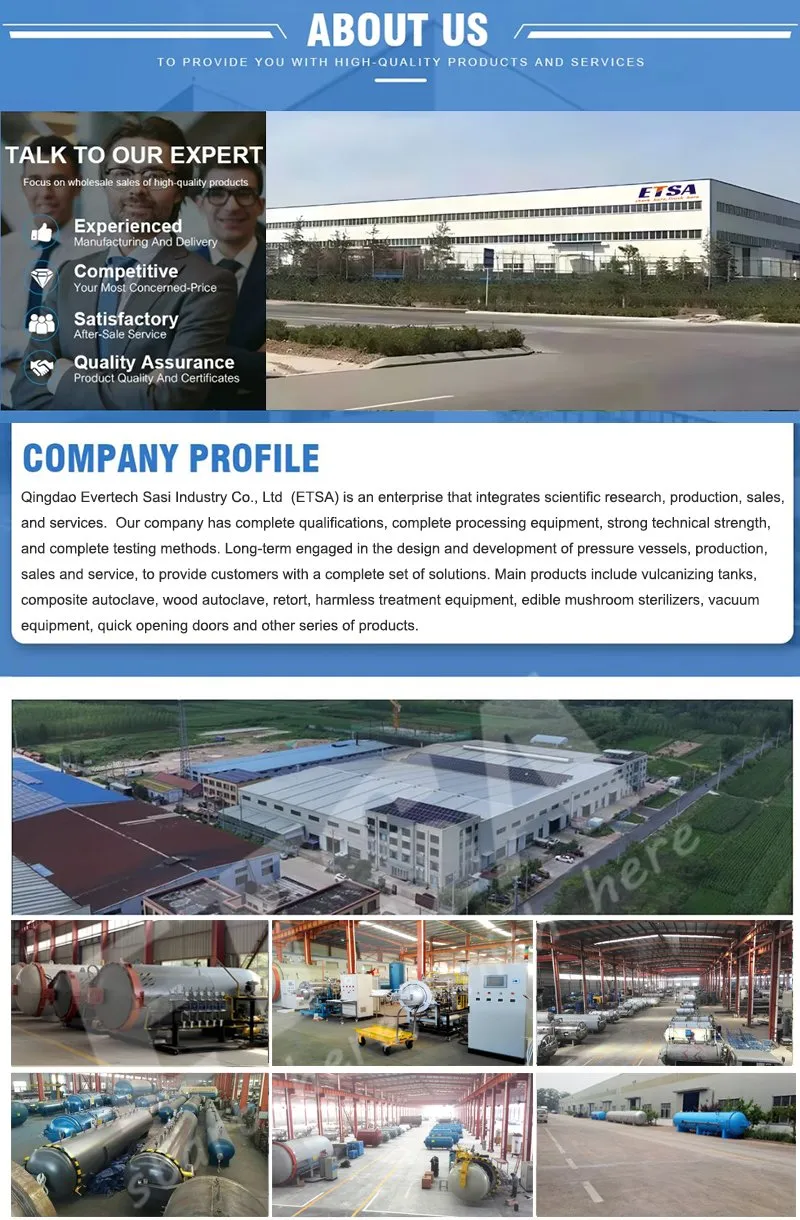
Factory View
Workshop
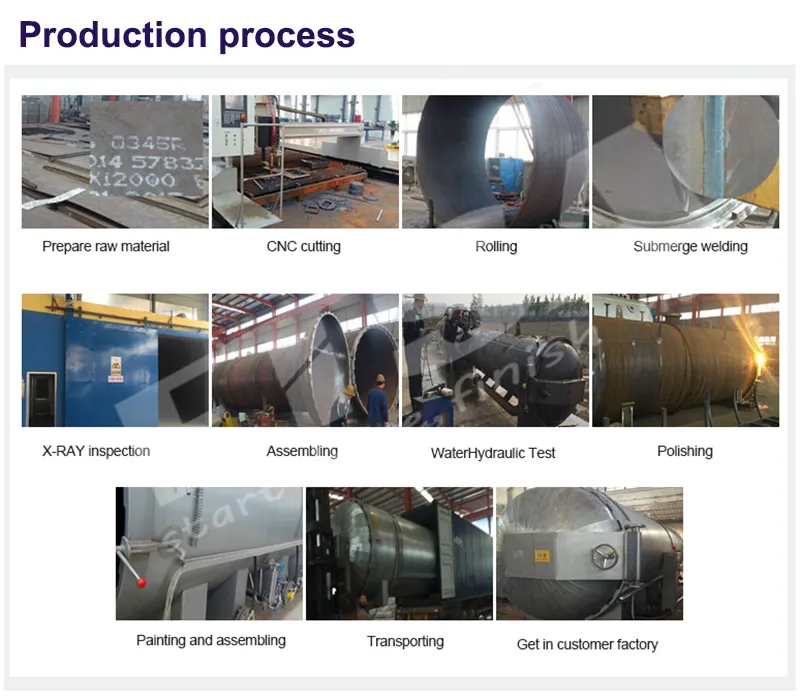
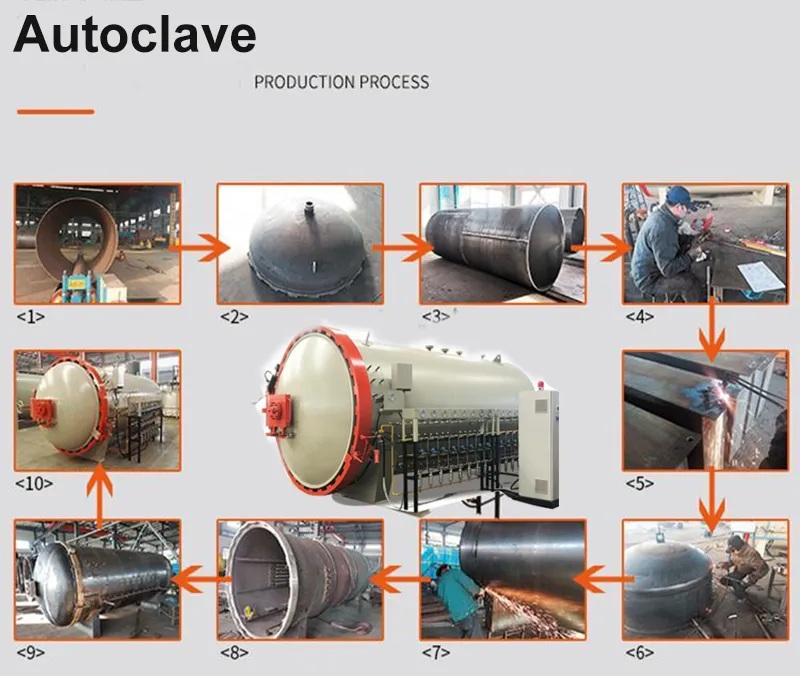
Manufacturing process
Frequently Asked Questions
What is the autoclave composite process?
It involves stacking layers of carbon or glass fiber in a specific sequence, embedding them in a polymer matrix, and curing them under specified temperature and pressure to achieve high-performance mechanical properties.
What control system is used for temperature and pressure?
The equipment utilizes a Siemens PLC automatic control system, providing precise temperature control with accuracy up to ±1.2ºC and reliable pressure management.
What are the main benefits of autoclave curing?
Autoclave curing is essential for R&D and manufacturing to create optimal composite products, ensuring uniform resin distribution, minimal voids, and superior structural integrity.
What safety features are included?
The vessel includes a quick-opening double safety interlock device, synchronous alarms, and automated pressure relief systems to ensure operator safety.
Are the sizes and parameters customizable?
Yes, technical parameters including effective diameter (500-4500mm), length (1000-20000mm), and working temperatures are fully customizable based on specific production requirements.
Which cooling methods are supported?
The system supports both water cooling and wind cooling methods, which are continuously adjustable to maintain the required temperature ramp-down rates.

Related Products